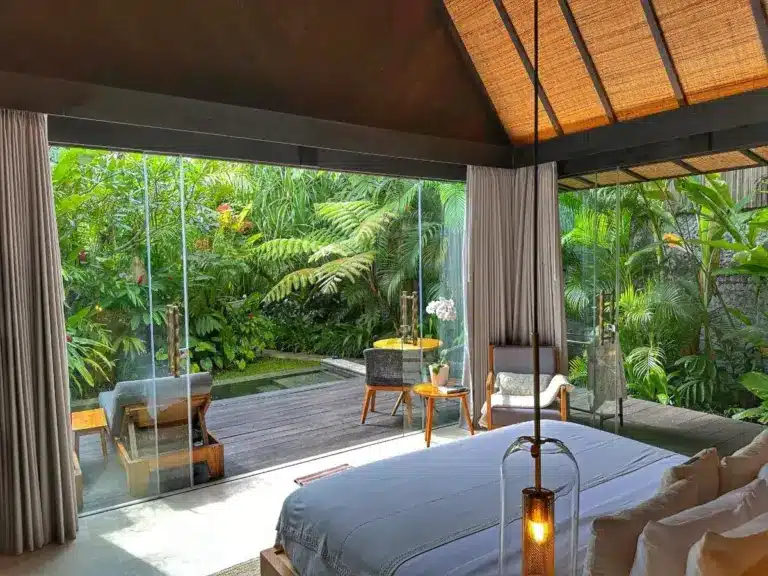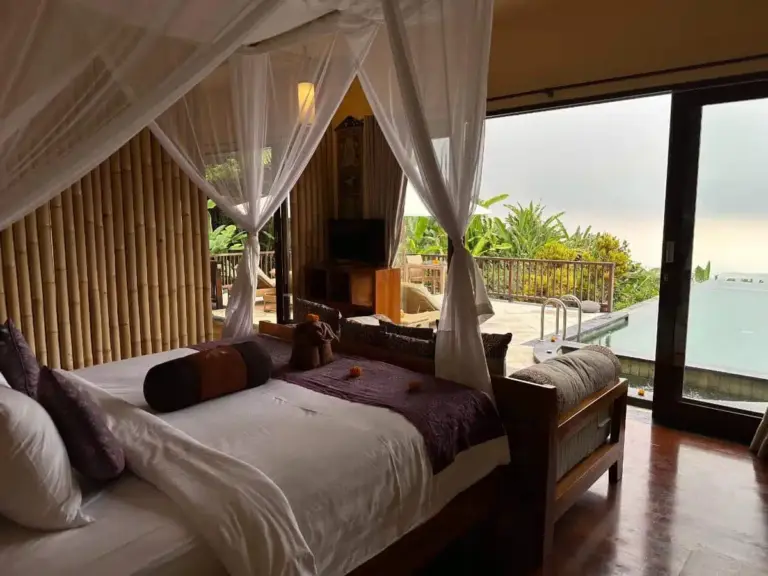
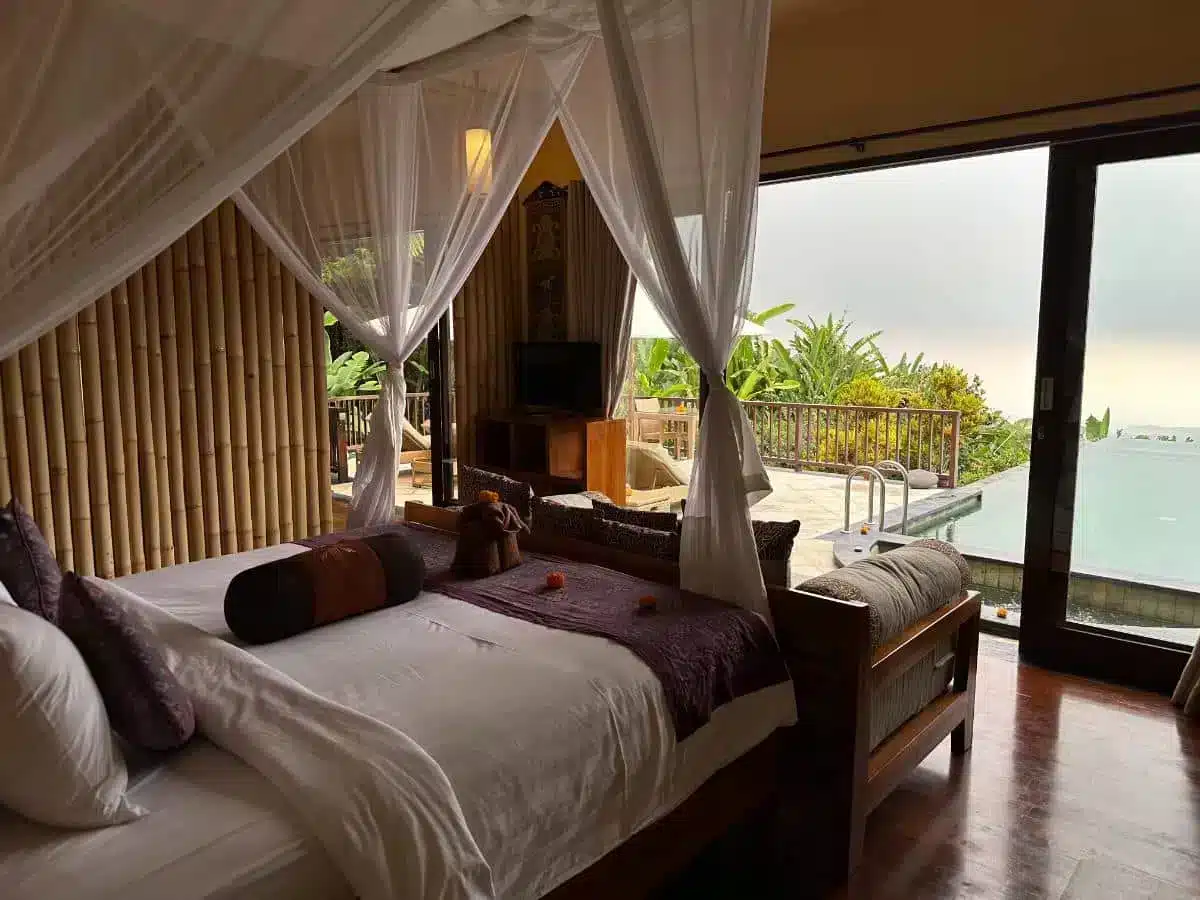
Namia River Retreat is a 60-villa wellness sanctuary on the Thu Bon River, 2.5 kilometers outside Hoi An Old Town. In this review, I evaluate the property’s sleep environment, environmental calm, nutritional offering, included daily wellness journeys, movement infrastructure, and service through the Restorative Index, the framework I built for travelers who want to return home feeling better than when they arrived.
I chose Namia for my birthday.
That sentence would have made no sense to me ten years ago. When I started traveling, a birthday meant nightlife, noise, and being close to where the action was. Fifteen years and 112 countries later, I book my birthdays differently. Sleep quality. Spa programming. Quiet rooms. Real food. The kind of stay that resets the nervous system rather than depleting it further.
Namia delivered on every one of those criteria.
If you’d rather see it than read it, here’s the full video review.
The drive from Da Nang took roughly forty minutes. I stepped out of the car into the welcome lounge, and the temperature shift was immediate. Not the temperature of the air. The temperature of the environment. The honking, the heat, the density of central Hoi An. All of it was gone within thirty seconds of arrival.
I stayed two nights at Namia in 2026 to evaluate whether the property genuinely restores energy or simply photographs well. As my Restorative Index score of 9.5/10 suggests, this is the most complete wellness property I have evaluated to date. Not just a beautiful resort with spa facilities. A sanctuary with deliberate, structured recovery programming integrated into every dimension of the stay.
If you want to return from Hoi An feeling measurably better than when you arrived, Namia River Retreat belongs at the top of your shortlist.


At a Glance
Restorative Index
Sleep Architecture & Acoustic Isolation — 28/30

The bed had several pillows in different firmnesses, and I picked the one that worked for me. A small detail. The kind that signals a property paying attention to sleep without making a marketing event of it.
The mattress was genuinely well-chosen. Soft enough to sink into within minutes, firm enough to maintain spinal alignment, and crucially, it did not trap heat. In a humid tropical climate, mattress thermoregulation is the difference between waking up rested and waking up sweaty.
The air conditioning held the set temperature consistently through the night, which is non-trivial in a villa this size. There was no AC noise. No compressor cycling audible from the bed. The villa also offered two ceiling fans on remote control, which I used in combination with the AC to fine-tune airflow without overcooling the room.


The acoustic isolation inside the villa was effectively perfect. Across two nights, I heard nothing from neighboring villas. From inside the villa I could not hear the river boats either, even in the early evening when some of them passed playing music.
That sound only reached me when I was walking around the wider property, and even then it read as part of the riverside atmosphere rather than as competing noise. It never extended into sleeping hours. The only ambient sound from inside the bedroom was the occasional bird call at dawn.
The lighting design separates a good wellness property from a great one. Reading lights on either side of the bed used warm-toned bulbs that did not interfere with melatonin production when used at night.


More importantly, the path from the bed to the bathroom had a motion-activated indirect light at floor level. Warm color temperature. Just bright enough to see where I was going. Dim enough that I could fall back asleep within minutes of returning to bed.
Most luxury hotels overlook the middle-of-the-night light exposure problem entirely. Namia engineered around it.
There was no other light pollution inside the room. The radio alarm clock had a small LED display that was easy to turn off. The air conditioning unit had no visible indicator light. The bedroom was dark. As it should be.


The single point of improvement, and the reason this category scores 28 out of 30 rather than a perfect 30, is the curtains. They darken the room significantly, but morning light leaks in at the bottom edges and along the sides. The villa is not 100 percent blackout. For most guests this will be a non-issue and may even be welcome. For travelers managing jet lag or sensitive sleep architecture, it is a meaningful gap.

Once I did wake up, however, the morning light access was exceptional. I could open the curtains, walk straight outside, and find myself in front of my private pool with an uninterrupted view of nature.
I spent the first fifteen minutes of every morning at Namia outside, in natural light, before checking any screen. That window of unfiltered morning sunlight is one of the most powerful inputs available for circadian rhythm regulation. At Namia, it is built directly into the villa’s geometry.


I also developed a small ritual on day two. Wake up, open the curtains, step outside, jump into the private pool. The water temperature was held at a level that felt refreshing without being shocking. A genuinely useful nervous system cue to start the day connected to the environment rather than to a phone.
Namia engineered around middle-of-the-night light exposure. Most luxury hotels still don’t.
Environmental Calm & Nervous System Regulation — 20/20
The property’s geography is the foundation. The villas sit on what is effectively a small private island, accessible only by a single internal bridge.

No through traffic. No passing scooters. No commercial activity bordering the property. The sensory environment is sealed off from the chaos of central Vietnam in a way that very few wellness properties manage to achieve.
The villa privacy is excellent without being absolute. My villa was spaced roughly five to ten meters from its neighbors on either side, with planted trees and a screening fence between properties.
From inside the villa, the private pool, or the outdoor shower, I could not hear my neighbors at any point during the stay. I could occasionally see them in the distance, which prevented the privacy from being total, but the buffer was generous enough that this never felt intrusive.
Combined with the type of guest Namia attracts, who tend to be calm, quiet, and present, the privacy in practice was far better than the architectural specification alone would suggest.
The soundscape is the real environmental asset. Birds. The Thu Bon River. Wind through the planted trees. The occasional boat in the early evening, sometimes carrying music, which read as part of the experience rather than competing with it.
Across the broader resort, the same calm held. Even at peak times like breakfast, when the property’s 60 villas can theoretically generate meaningful guest density, the atmosphere remained relaxed.


The breakfast restaurant has both indoor and outdoor seating. Most guests sat inside due to the heat and humidity, but the space never felt crowded. The temperature was held well. The food presentation was unhurried.
The visual environment is equally deliberate. Namia is built around three concepts: crafted with nature, life by the river, and ritual of life. In practice this translates to bamboo, wood, stone, and water as the dominant materials, with nothing competing visually.
Seen from above, the property’s pathways branch from a central axis like a tree, with each villa positioned at the end of a branch. It is a design principle most guests will never consciously register. But it is doing real work. The geometry creates privacy without producing isolation.


The microclimate is not cooler than central Hoi An in the way Munduk Moding Plantation’s altitude is cooler than coastal Bali. Namia is at sea level, in the same humid environment as the rest of the region.
What it offers instead is a sealed environment within that climate. The air feels cleaner because it is not carrying scooter exhaust or street dust. The temperature feels manageable because the property’s tree canopy and water features moderate it locally.
From the moment I crossed the bridge until the moment I left, I felt disconnected from the chaos of travel. That is the entire point of environmental calm as a Restorative Index dimension, and Namia delivers it without compromise.
The bridge is the only way in. That detail does the work that most spa marketing budgets cannot.
Nutritional Impact & Stable Energy — 14/15


I evaluated breakfast across both mornings of my stay. I did not eat lunch or dinner on-property. The breakfast experience alone justified a near-perfect score, and the breadth of options was the most thoughtful I have encountered at a wellness property in Southeast Asia.
Protein availability was excellent. Eggs were prepared in every style on request: fried, scrambled, omelette, poached. Smoked salmon was on the buffet daily, alongside additional fresh fish options. Grilled chicken was available. Stir-fried vegetables. Sourdough bread. The protein-forward eater has every option needed to start the day strong.
The Vietnamese side of the breakfast offering is equally well-developed. Local dishes are available alongside the international options, which is important. You are in Vietnam. You should be able to eat Vietnamese food at breakfast if you want to. Namia treats this as a feature rather than an afterthought.

The juice program is a small detail that signals serious intent. Freshly squeezed watermelon juice. Orange juice. Other rotating fruit options. None with added sugar. The kind of consideration that most luxury hotels overlook, defaulting to bottled or pre-mixed juices that spike blood sugar without contributing meaningfully to nutrition. Namia got this right.
The coffee is high quality. The matcha is well-made. The tea selection is broad. For guests who use morning caffeine as part of their daily energy routine, the options are there, and they are executed competently.
For guests who want to indulge, the buffet also includes fresh croissants and other sweet options. This is a wellness property, not a clinic. The choice belongs to the guest. Namia provides the protein-forward, low-glycemic toolkit alongside the indulgence options without judgment in either direction.
The single point deducted reflects the absence of a structured nutritional wellness program. There is no in-house nutritionist on staff. There is no curated anti-inflammatory or wellness-aligned menu, no integration between the kitchen and the spa’s wellness offerings. For a property scoring this highly across every other dimension, even a simple curated wellness menu highlighting the highest-protein, highest-density options would close the gap to a perfect score.
Namia gives you the protein-forward toolkit and the croissants. No judgment in either direction.
Bioregulation & Spa Recovery — 15/15


This is where Namia separates itself from every other wellness property I have evaluated.
I scored the included Lumina Wellbeing & Spa journey, the hammam, sauna, and massage sequence, on its own against my full spa framework: read the Lumina Wellbeing & Spa review (Restorative Spa Score: 95/100).
Every guest receives a 90-minute wellness journey, every night of their stay, included in the room rate. Read that again. Not a spa add-on or a marketing inclusion. The structural center of the Namia experience. Guests come to Namia for the spa programming as much as for the property itself.
Across two nights, I experienced two full journeys. The first paired a hammam with a Vietnamese traditional massage. The second paired a sauna and ice bath circuit with a massage.
The intake process tells you everything about the operational seriousness. On my first visit to the spa, I completed a detailed health questionnaire covering blood pressure, skin sensitivities, injuries, surgical history, and medical conditions.
The therapist asked about pressure preference, soft, medium, or firm. She walked me through every available treatment option, explaining each one in detail. For the hammam I was offered four different scrub options, each with different active herbs and different intended effects.
Staff suggested specific pairings based on what I told them I wanted from the session. This is the consultation depth I expect from a clinical wellness property, not from a hotel spa.
The hammam ritual was genuinely traditional, not aesthetic theatre. The therapist mixed the herbal scrub in front of me, explaining what each component did. Perilla. Mugwort. Jasmine. Angelica. Honey.


He had the actual plants on display so I could see them before they went into the mix. The scrub itself happened on a heated stone slab inside a steam room. The Vietnamese traditional moxa stick ritual followed, with the burning herb passed around the face for what they call the smoking ritual. It is a little hot. It is also genuinely therapeutic in a way most hotel spa rituals are not.
Between the hammam and the massage, the spa offers a small relaxation room with a window facing the river. Five minutes of tea and a ginger snack to let the nervous system register the transition between treatments. A small detail. Also the difference between a sequence of spa treatments and a coherent therapeutic protocol.
The massage rooms upstairs offer some of the best treatment-room views I have experienced. Floor-to-ceiling windows over the river. Soft lighting. Quiet music. No outside noise penetrated the room at any point. The therapist worked with skilled, consistent pressure and checked in periodically without breaking the silence.
The sauna and ice bath circuit on day two was the standout. The sauna is private, with a window facing directly onto the river.


The therapist guided me through the sauna sequence, applying different oils and aromatherapy elements throughout, explaining each step. We finished with a brief breath work session inside the sauna, which significantly deepened the parasympathetic response.
The ice bath sits outside the sauna, also with a river view. After an outdoor rinse shower, I went directly into the ice bath. If you stay at Namia, time the sauna and ice bath circuit for early evening. As the sun sets, the boats passing on the river light up. You sit in the cold water watching the river illuminate. One of the most distinctive recovery moments I have experienced anywhere.
The spa environment is exemplary. Quiet. Clean. Well-lit for downregulation rather than display. Privacy is structural, not performative. Staff anticipate transitions rather than reacting to them.
What pushes this category to a perfect 15/15 is the integration. Treatments are not standalone services to be selected from a menu. They are paired, sequenced, and recommended based on what each guest tells the team they need.
The thermal contrast is guided. The hammam includes a structured rest interval. The sequencing is built. Most luxury hotel spas offer the components.
Most luxury hotel spas offer the components. Namia offers the protocol.
Biomechanics & Movement — 8/10


Namia’s gym is small but exceptionally well-curated.
The equipment selection signals that someone with actual training experience designed it. A cable machine for full-body work. A combination machine for squats and bench press. Free weights in the 2.5 to 10 kilogram range. Two treadmills. A stepper. Two stationary bikes for cardio. The gym does not try to be a full commercial fitness center. It selects the most useful pieces of equipment for the typical wellness guest and executes that selection well.
The environment matters as much as the equipment. The gym sits inside the property with large windows looking out onto greenery, abundant natural light, and individually controllable air conditioning.
I was able to set the gym to roughly 18 degrees Celsius, which made training in a tropical climate genuinely comfortable. Across two days, I had the gym entirely to myself for every session. For guests who want serious training during a wellness stay, this is operationally excellent.
The yoga program is the second movement pillar, and it is strong. Four guided classes per day in a dedicated yoga studio next to the gym. The studio is quiet, well-temperature-controlled, and equipped properly.


The instructor was professional, attentive, and personalized her teaching to each attendee. Before every class she asked about medical conditions, prior yoga experience, and any movement restrictions.
She remembered names. She corrected form individually. The sleep yoga class at 8 PM was the highlight. I would book a return stay for that program alone.
Beyond the gym and the studio, Namia integrates movement into the broader stay. Two complimentary bamboo bicycles per villa, parked at the entrance, available for use on the property and into Hoi An Old Town with a provided lock.

A daily complimentary guided cycling tour to the Old Town for guests who want a structured option. Guided boat tours where the guest can take over the rowing if they want upper-body work. The main pool is large enough for serious lap swimming. Running and jogging around the property is possible and I saw a few guests doing it.


The two points deducted reflect the absence of structured group fitness programming inside the gym. A daily 30 to 45-minute circuit class, or a single fitness class held at the main pool, would meaningfully expand the movement category for guests who want more variety without leaving the property. Adding this would be a relatively low-cost intervention with disproportionate impact, and would close the gap to a perfect score.
Namia selects fewer machines and uses every one of them better than most resort gyms five times the size.
Frictionless Operations & Cognitive Ease — 10/10
This dimension measures something most luxury hotels overlook: the cumulative cognitive cost of being a guest. Every decision you have to make, every miscommunication you have to resolve, every moment you spend waiting or wondering drains the same finite energy pool that the property’s other wellness features are trying to replenish.
Namia eliminates friction with a discipline that earns the highest possible score in this category.
On check-in, every guest is assigned a personal host who handles every request for the duration of the stay. The host is reachable directly via WhatsApp at any hour, including when the guest is off-property.
I tested this. Whatever I needed, I sent a message. Whatever I sent, was handled. No front desk to call. No phone tree. No “please hold” while my request was transferred. One person, one channel, one accountable point of contact across the entire stay.
The in-villa phone provides a backup channel for any operational request: housekeeping, food and beverage, transport. Calling for a golf buggy from any point on the property reliably produced a buggy at my villa within five minutes. Not a single appointment ran late across two days. The sunset cruise, the spa appointments, the guided activities, all started exactly on time and required no follow-up from me.
What separates a 10 from an 8 in this category is anticipation rather than reaction. By the second day, the staff had identified my preferences and were providing them before I asked.
I never had to ask the same question twice. I rarely had to ask any question at all.
Across two nights, the stay felt effortless. Not a single moment of cognitive friction.
Luxury, properly understood, is the removal of unnecessary decisions. Namia understands this.
Restorative Index — Score Breakdown
| Dimension | Weight | Score | |
|---|---|---|---|
| Sleep Architecture | 30 | 28 | |
| Environmental Calm | 20 | 20 | |
| Nutritional Impact | 15 | 14 | |
| Bioregulation (Spa) | 15 | 15 | |
| Biomechanics (Movement) | 10 | 8 | |
| Frictionless Operations | 10 | 10 | |
| Restorative Index | 100 | 95 |
The Prescription


The Ideal Guest: Namia River Retreat is built for the guest who wants to leave Vietnam having genuinely recovered, not just having traveled.
Burned-out professionals who need a hard reset. Couples seeking a honeymoon environment that values shared silence over shared entertainment. First-time wellness travelers who want a property where the program is built rather than self-assembled.
Solo travelers, of any gender, who understand that two nights of structured restoration can deliver more than a week of unstructured leisure. Guests who pay attention to sleep, recovery, and food, and who want a property that pays the same attention back.
The Wrong Fit: Not the property for guests who need external stimulation to feel that their vacation is working.
No nightlife on-property. No party scene. No curated entertainment program. No proximity to bars, late-night restaurants, or the action of central Hoi An beyond a complimentary daily shuttle. Guests who define a holiday by activity density rather than recovery quality will find the offering too quiet.


The Final Verdict — The ROI of Rest
Namia River Retreat is the most complete luxury wellness property I have evaluated. The score reflects that.
What separates it from every other property in this category is the integration of recovery into the structural design of the stay. The 90-minute wellness journey is not a bonus or an upsell. It is the spine of the experience.
Two nights at Namia delivered three hours of guided, professionally executed spa programming, layered on top of sleep architecture engineered with real attention to detail, environmental calm achieved through deliberate geographic and architectural choices, food that supports performance, movement options that make staying in shape effortless, and a service operation that eliminates the cognitive friction most luxury hotels quietly impose on their guests.
At approximately $962 per night for two people, with all activities, breakfast, and the daily 90-minute wellness treatments included, the price-to-restoration ratio is exceptional.
The included spa programming alone, valued individually, represents a meaningful portion of the rate. The remainder buys you a private pool villa on a sealed-off riverside property in one of Vietnam’s most distinctive locations. The math makes sense.
I chose Namia for my birthday because I wanted to spend the day on something that paid me back. Sleep that left me sharper than when I arrived. Spa programming that worked on my nervous system rather than just my muscles. Food that supported the morning workout rather than undermining it. A service team that anticipated what I needed before I had to ask.
You will leave Namia River Retreat feeling better than when you arrived. Measurably so. The only metric that matters.
Book Namia River Retreat
From ~$962/night for two, including daily 90-minute wellness journey.


Tim Kroeger is a luxury wellness travel and longevity editor and creator of The Restorative Index. Drawing on 15+ years of travel across 112+ countries and 230+ nights assessed using his framework, he reviews hotels through one question: Did you leave feeling better than when you arrived?
A former Lufthansa flight attendant and endurance traveler, Tim documents his longevity journey as Founding Ambassador of Healthi Life Longevity House in Bangkok. He appeared in ZDF’s Forever Young in Thailand documentary.
Read how 15 years of full-time travel, burnout, and one afternoon in Fiji led Tim to rethink luxury and create the Restorative Index: Read Tim’s story →