
Honest Desa Hay Bali Review, a boutique wellness retreat near Canggu. Sleep quality, villa design, dining, and Restorative Index score. Tested in person.
The area has grown into one of Bali’s busiest hubs. Cafés are filled with remote workers, beach clubs buzz from afternoon until late in the evening, and scooters weave constantly through the narrow streets. It’s lively and exciting, but it can also become exhausting.
That’s why Desa Hay immediately felt different.
Located just northwest of Canggu, the small boutique property sits in a peaceful pocket near Pererenan Beach. The centre of Canggu is only about ten minutes away by motorbike, yet the atmosphere here feels noticeably calmer from the moment you arrive.
At first, it simply feels like a pleasant escape. After spending some time there, though, it becomes clear that the calm is not accidental.
Desa Hay is engineered around a simple premise: that proximity to energy doesn’t have to mean exposure to it.
The villa spacing, garden buffering, indirect evening lighting, and stripped-back design all point to a property that has thought carefully about sensory reduction.
I spent three nights testing whether that intention translates into genuine restoration, or whether it’s just a pretty setting that happens to be quiet.
At a Glance
Restorative Index
8.8 / 10 — Restorative Stay
A calm boutique property where privacy, thoughtful villa design, and attentive service create a noticeably restorative environment. The hotel excels in sleep quality and environmental calm, although it lacks the extensive spa and movement facilities found at larger wellness resorts.
Restorative Index – Score Breakdown
| Dimension | Weight | Score | |
|---|---|---|---|
| Sleep Architecture | 30 | 30 | |
| Environmental Calm | 20 | 20 | |
| Nutritional Impact | 15 | 14 | |
| Bioregulation (Spa) | 15 | 7 | |
| Biomechanics (Movement) | 10 | 7 | |
| Frictionless Operations | 10 | 10 | |
| Restorative Index | 100 | 88 |
The Stay
A Quiet Location Close to Canggu
Desa Hay sits just outside the busiest part of Canggu, around a ten-minute drive from the centre and about ten minutes from Pererenan Beach.
There isn’t much directly around the property apart from a few cafés, which actually works in its favour. The surroundings feel residential and calm, creating a noticeable contrast to the constant activity in central Canggu.
Yet if you want restaurants, beach clubs, or surf spots, they are still easily accessible by motorbike.
Once I settled into the villa, though, I found myself surprisingly reluctant to leave.
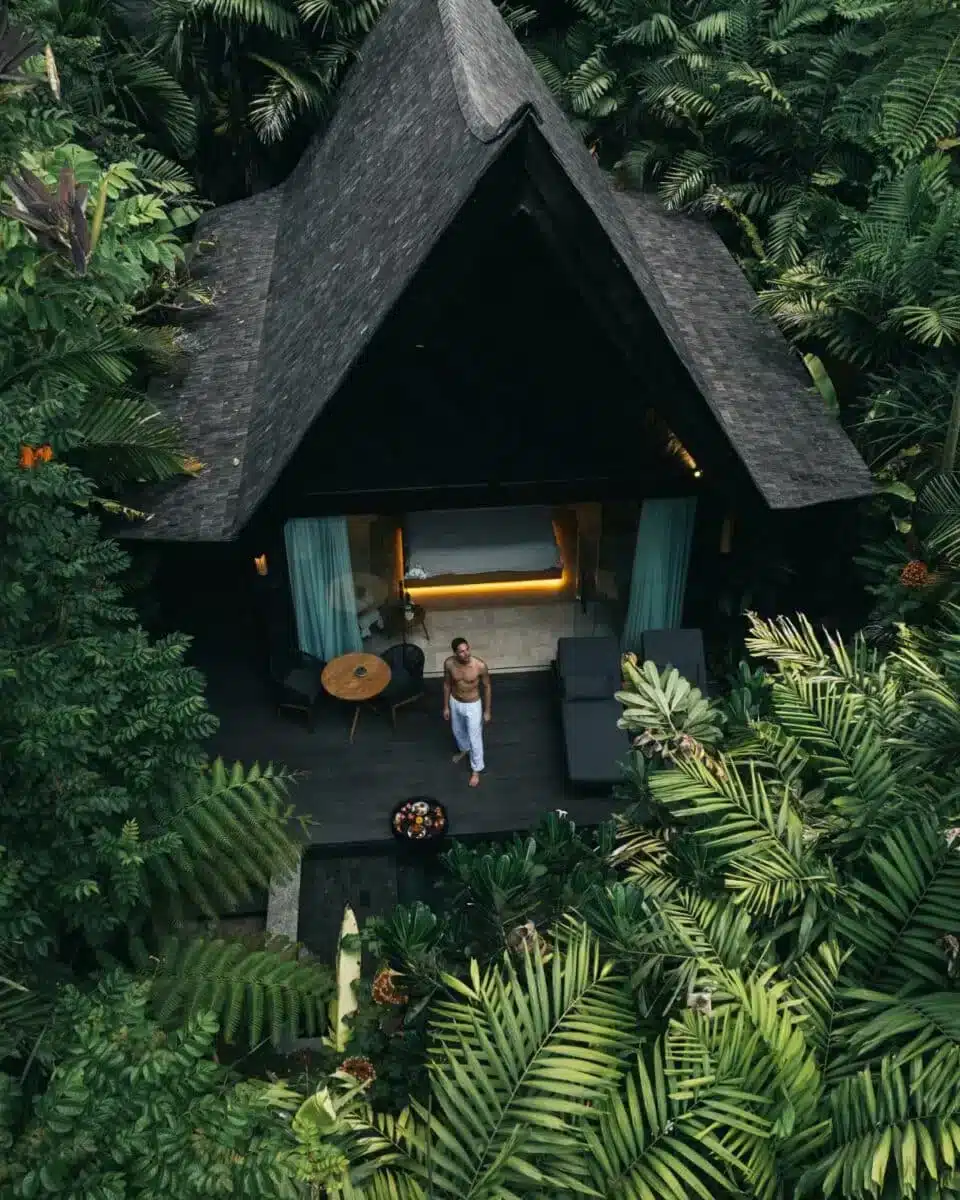
The Premium Jabu Villa with plunge pool
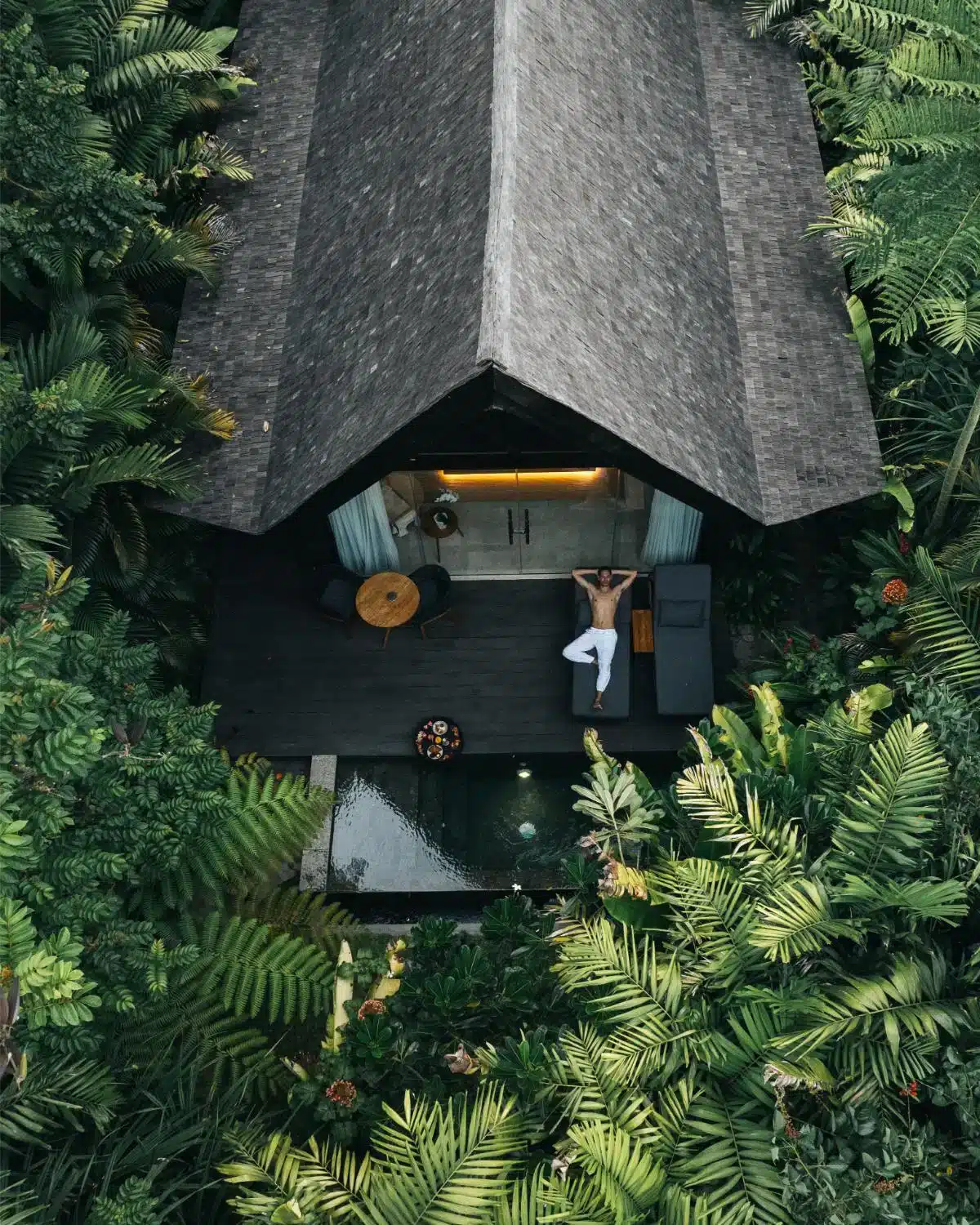
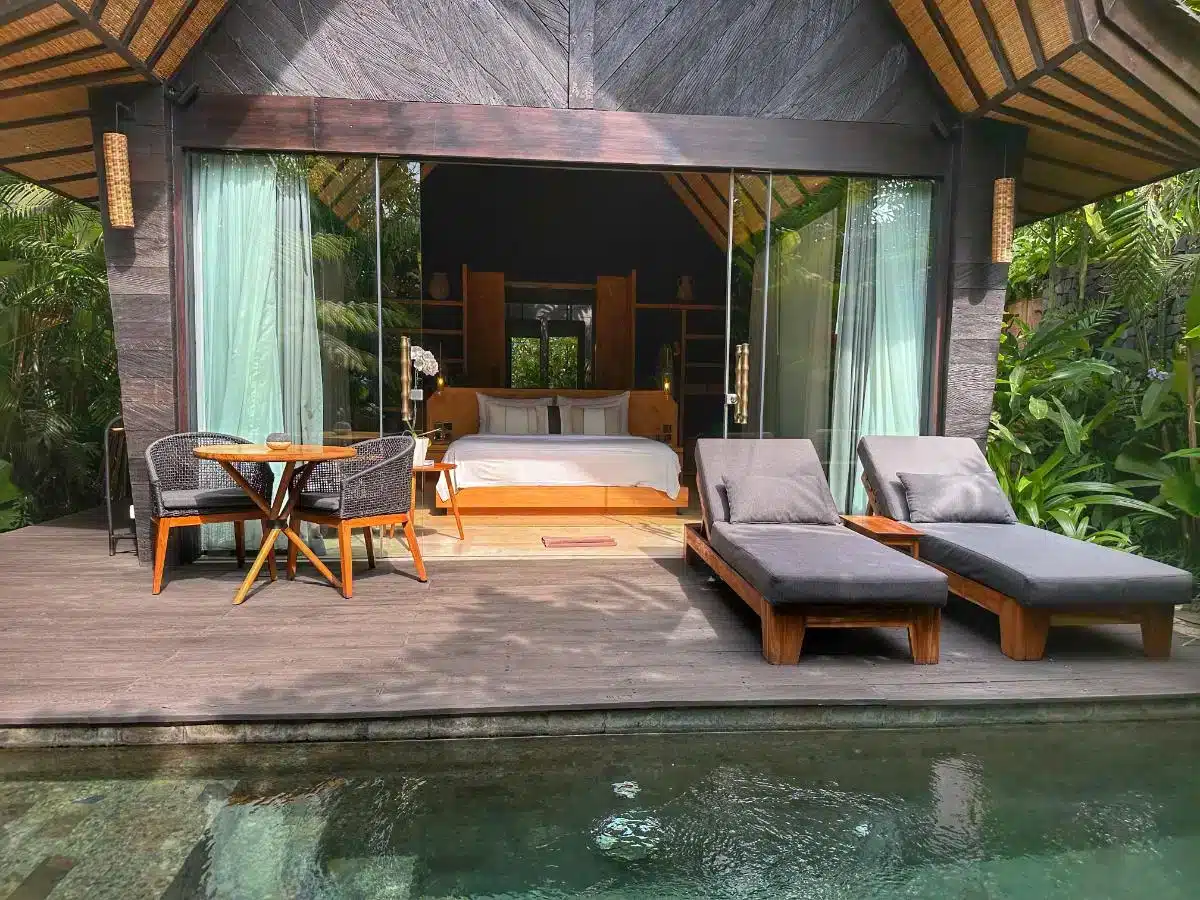
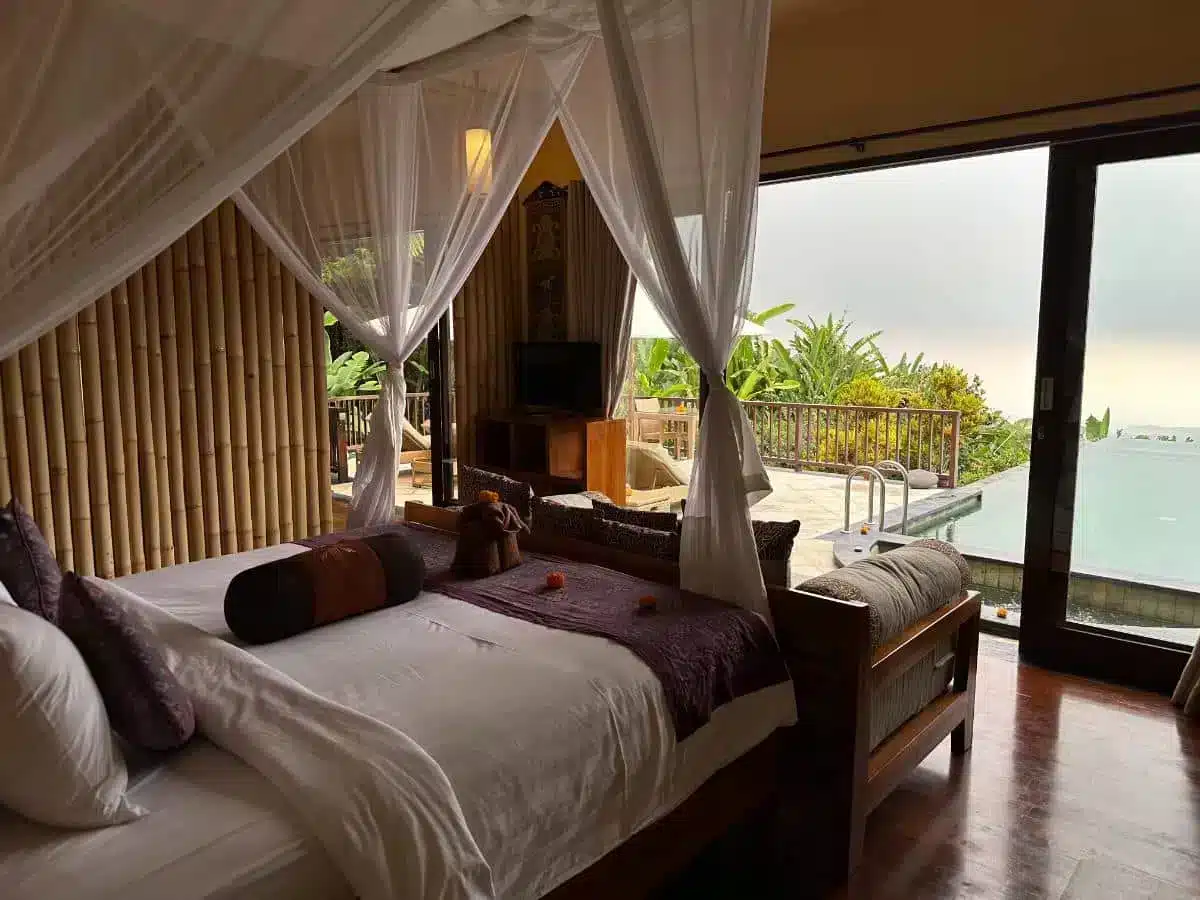
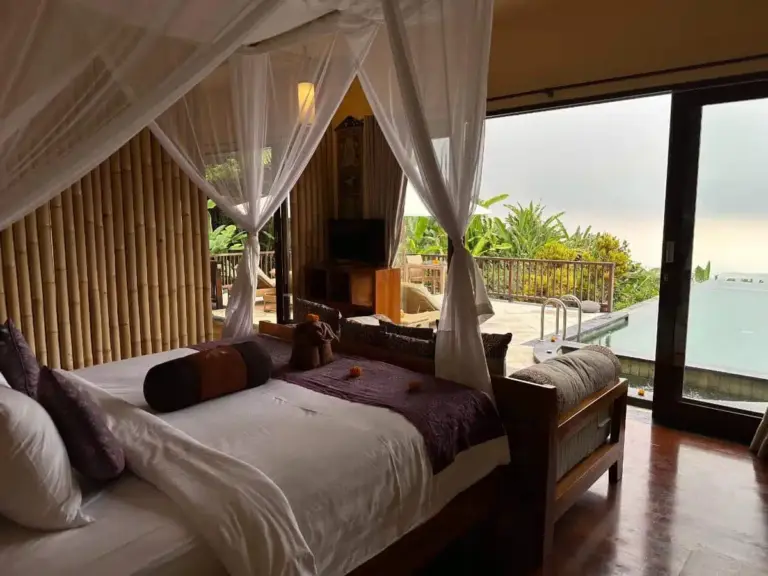
During my stay, I slept in the Premium Jabu Villa with a plunge pool, and the space felt incredibly inviting.
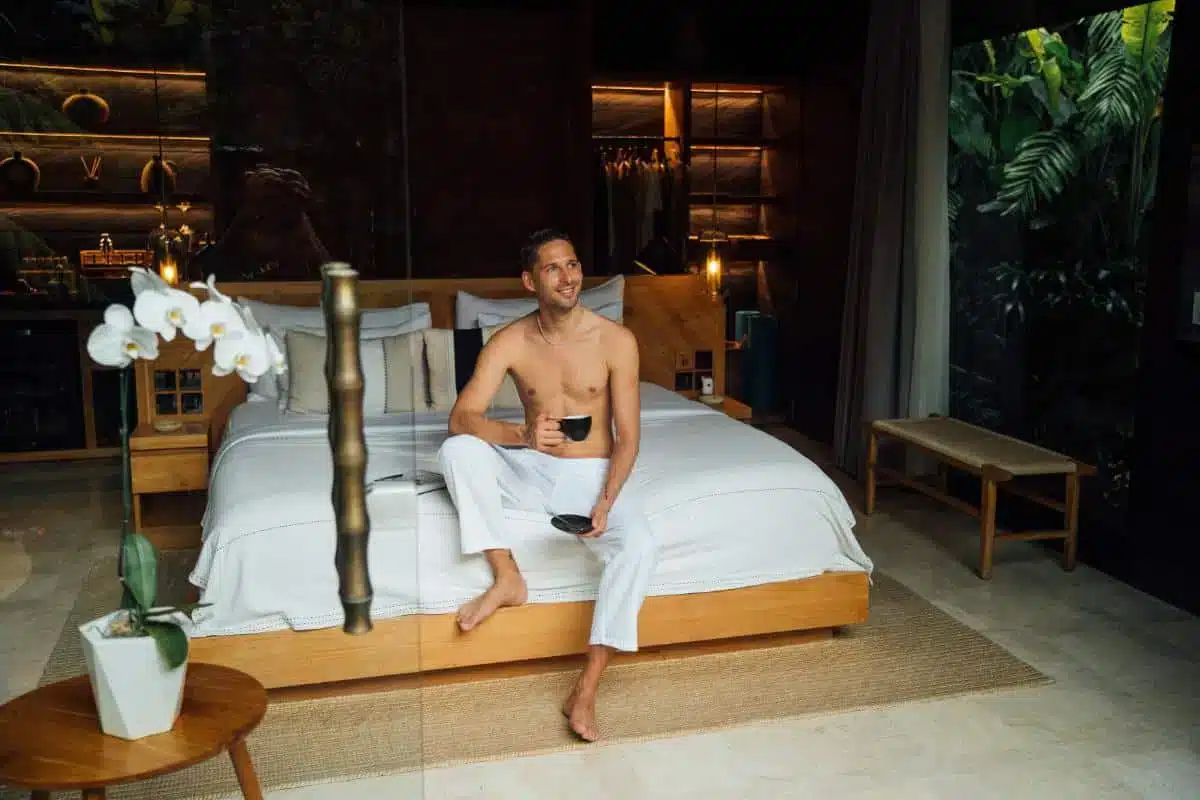
The bed faces directly toward the private garden and pool, framed by large floor-to-ceiling windows that bring natural light into the room throughout the day. The high ceiling creates an open, airy atmosphere.
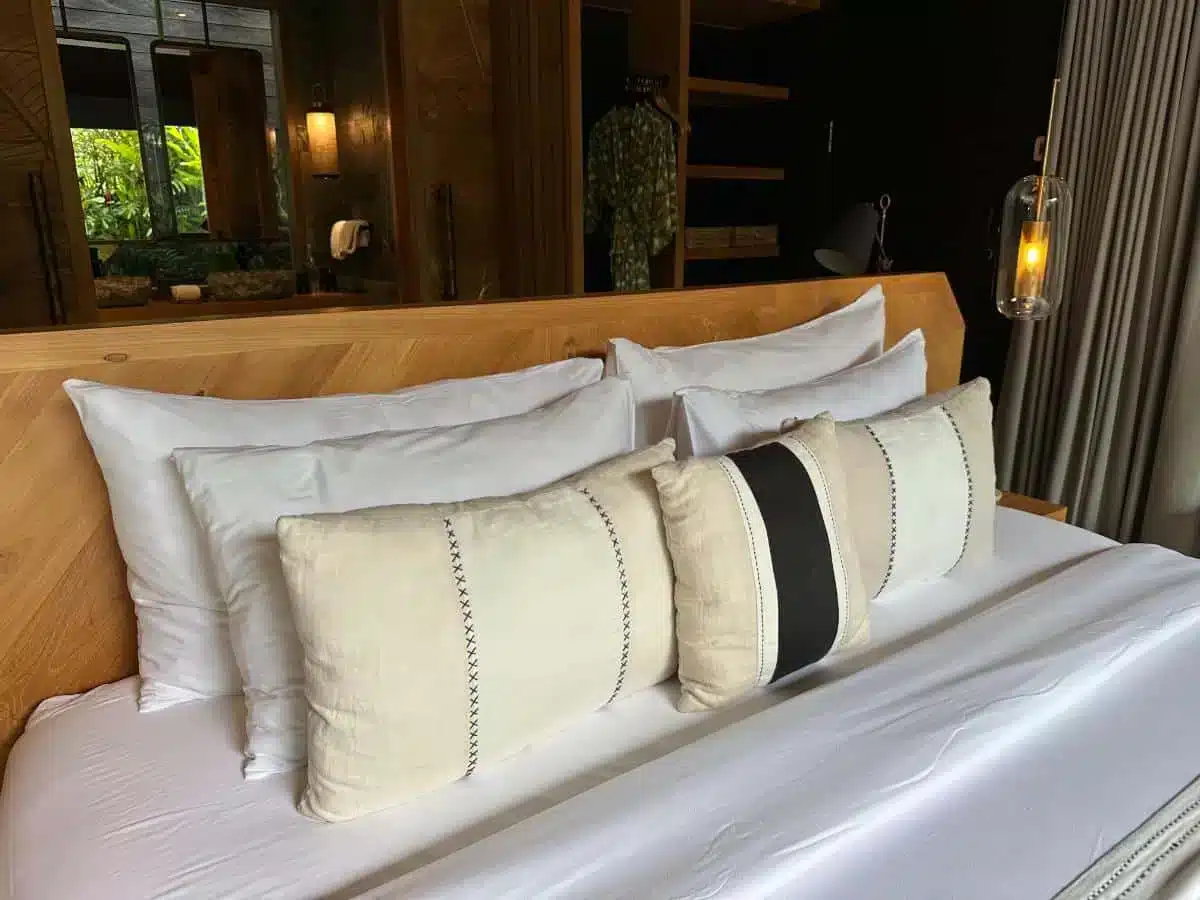
The mattress was very comfortable and supportive, and the selection of pillows made it easy to adjust the sleeping setup to personal preference.
Blackout performance was strong. The curtains blocked almost all the light at dawn. Acoustic isolation was equally effective: despite the villa’s open garden design, I heard no hallway traffic, no neighbouring guests, and no mechanical HVAC noise during the night.
The air conditioning ran quietly and maintained a stable temperature throughout, which is worth noting in Bali’s humid climate, where inconsistent cooling can easily fragment sleep.
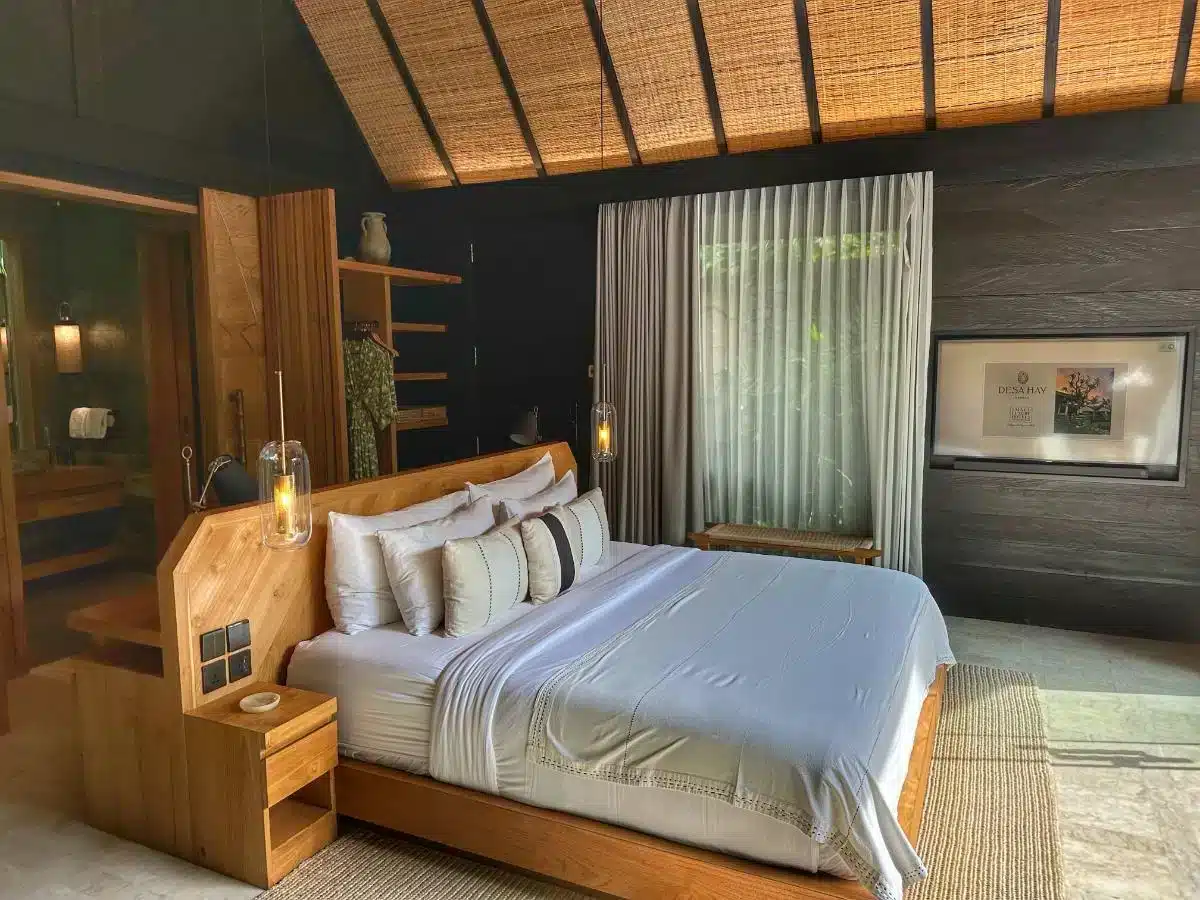
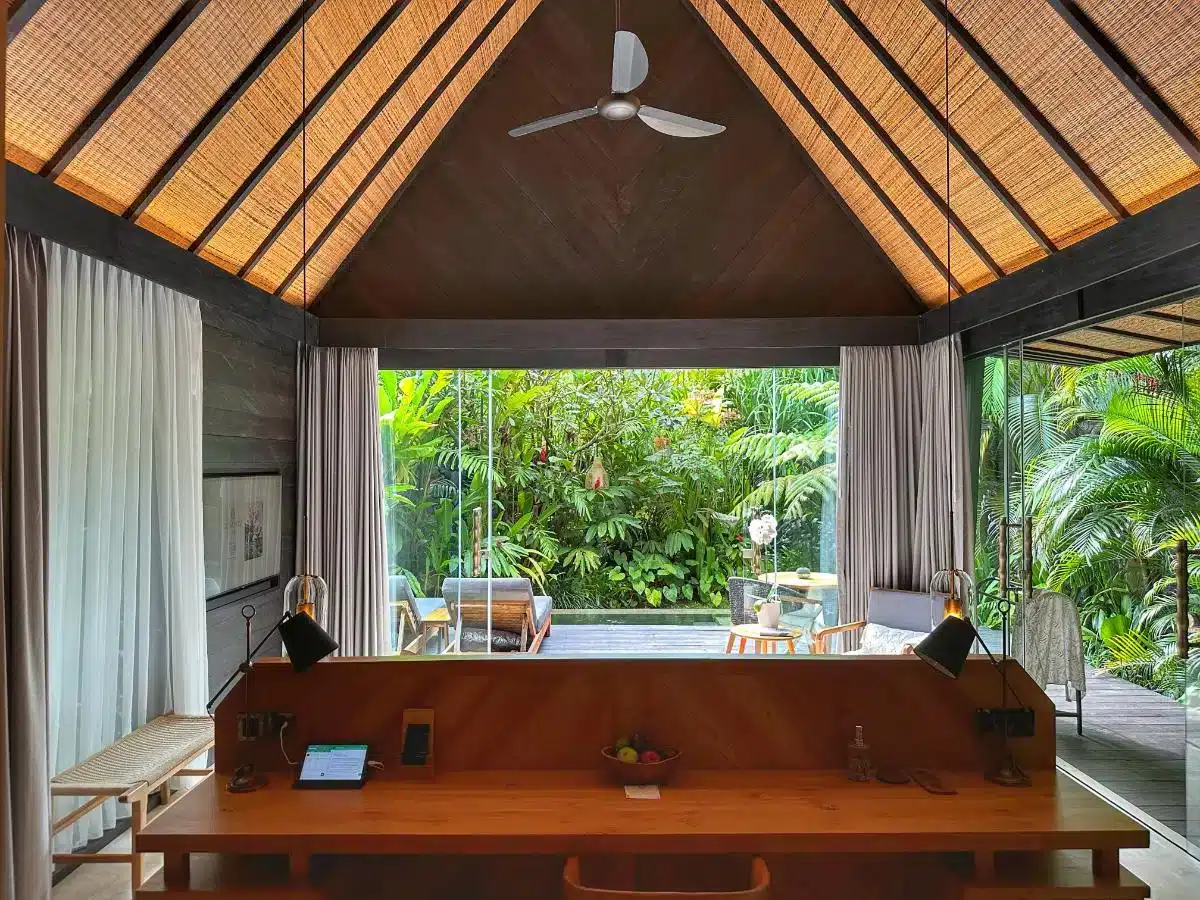
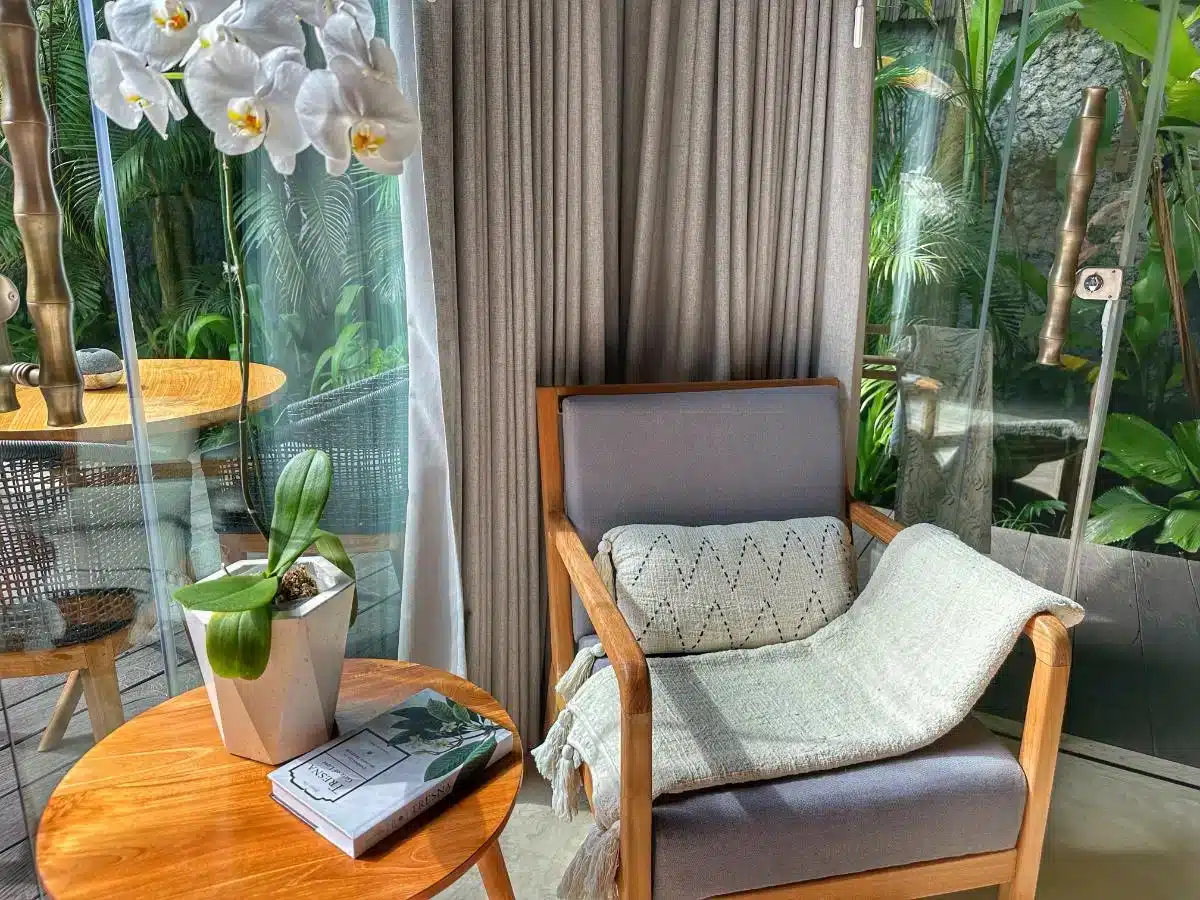
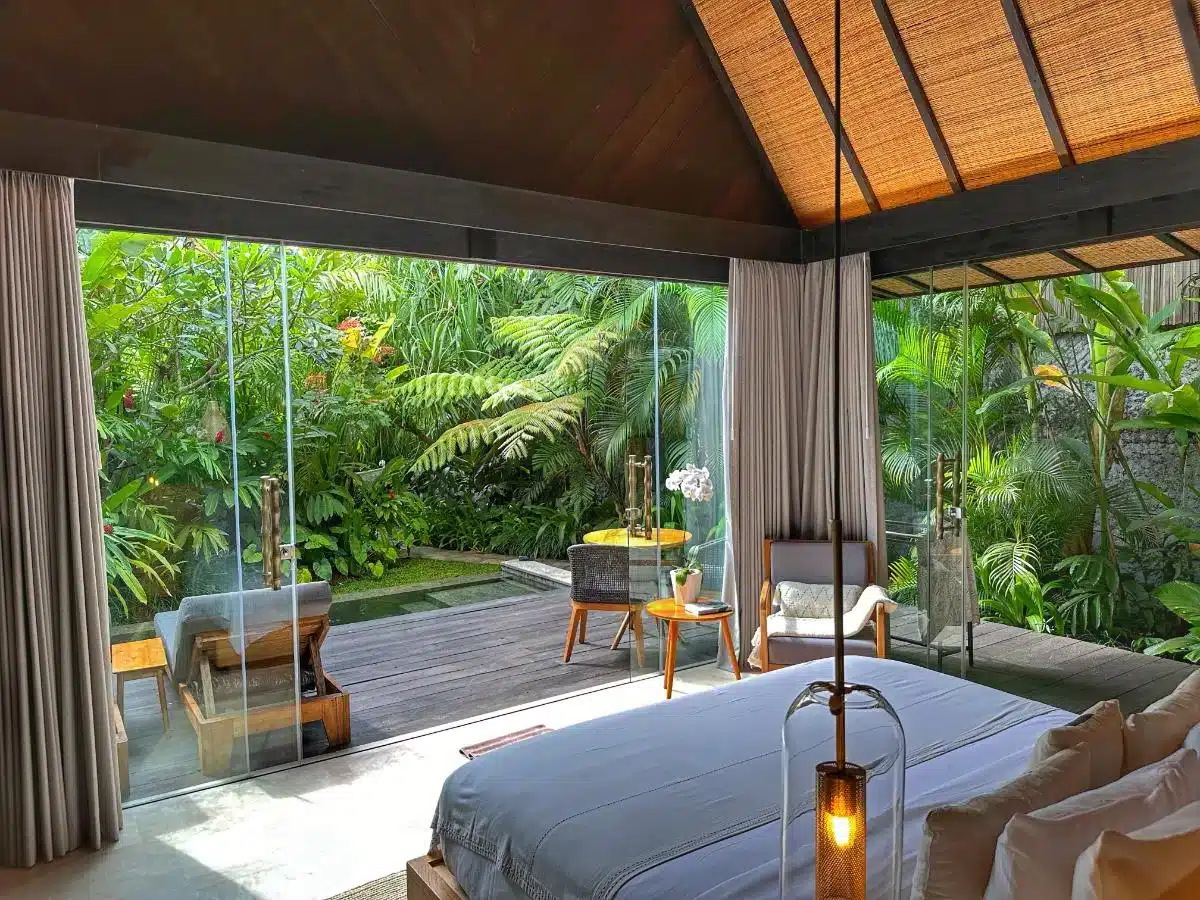

Practical details were also clearly considered. Power outlets and light switches are conveniently placed beside the bed, which makes the room surprisingly comfortable for both relaxation and work.
The villa includes a smart TV with Netflix, a small desk overlooking the garden, and a comfortable chair by the window that quickly became my favourite place to sit with a book.
A tablet connects guests to the hotel staff through a private WhatsApp group, which turned out to be one of the most convenient aspects of the stay. Anything I needed, housekeeping, food, or a quick question, was just a message away.
The minibar was also well stocked with wines, liquors, soft drinks, coffee, and tea.
Lighting transitions were handled well. During the day, natural light fills the villa through the floor-to-ceiling windows. By evening, the property shifts to warm, low-level lighting across the pathways and gardens, no harsh overhead spots, no blue-toned LEDs.
Crowd density was minimal throughout my stay; the property is small enough that common areas never felt shared. The dominant soundscape was birds during the day and near-silence at night, with occasional distant temple sounds that added to rather than disrupted the atmosphere.
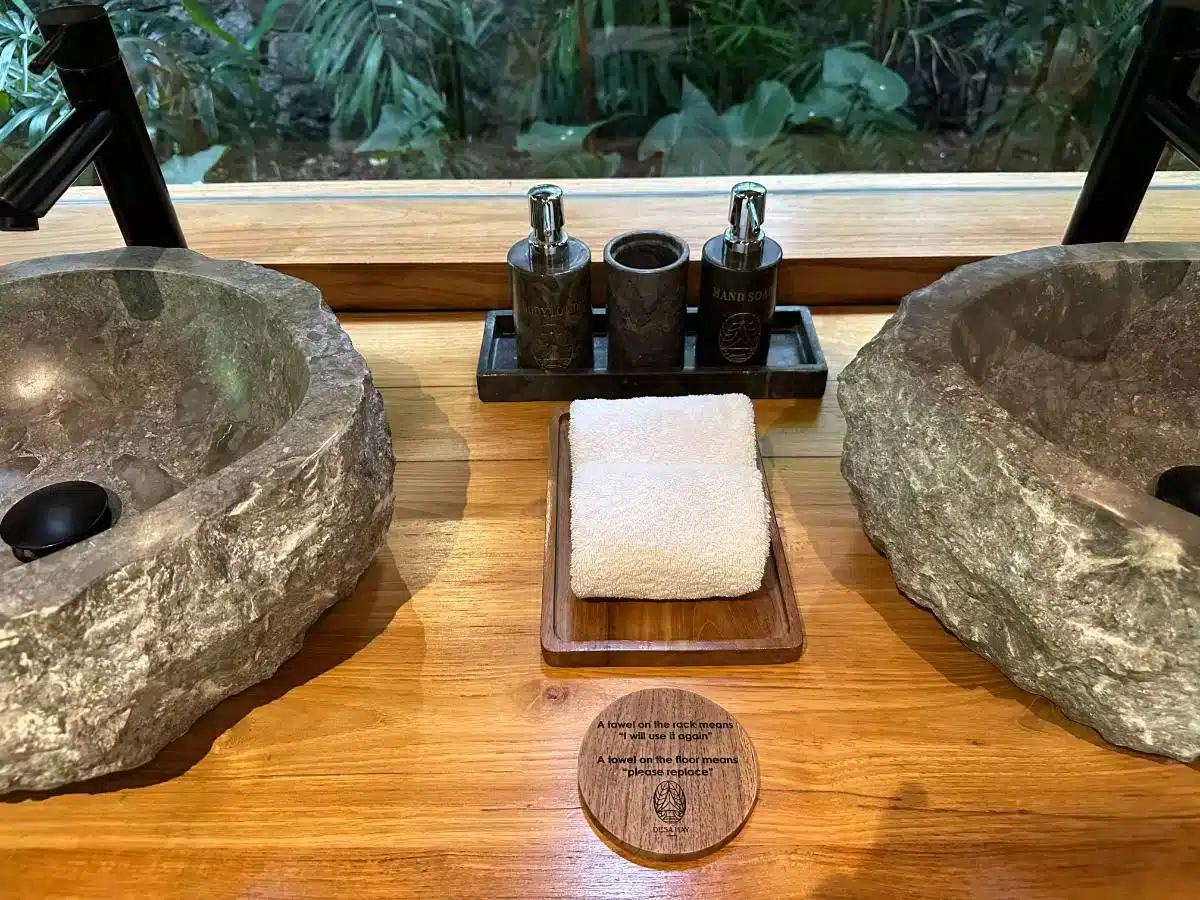
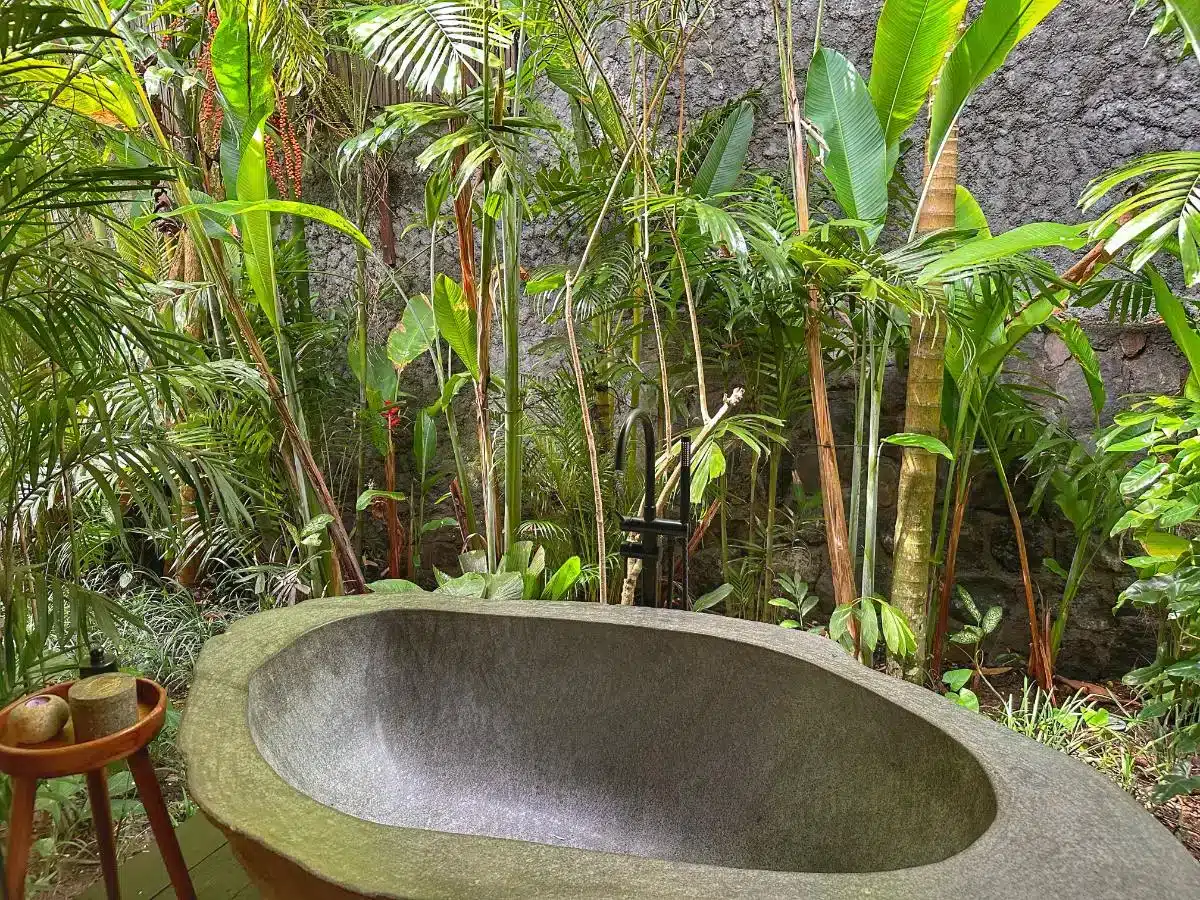

Bathroom and Outdoor Bathtub
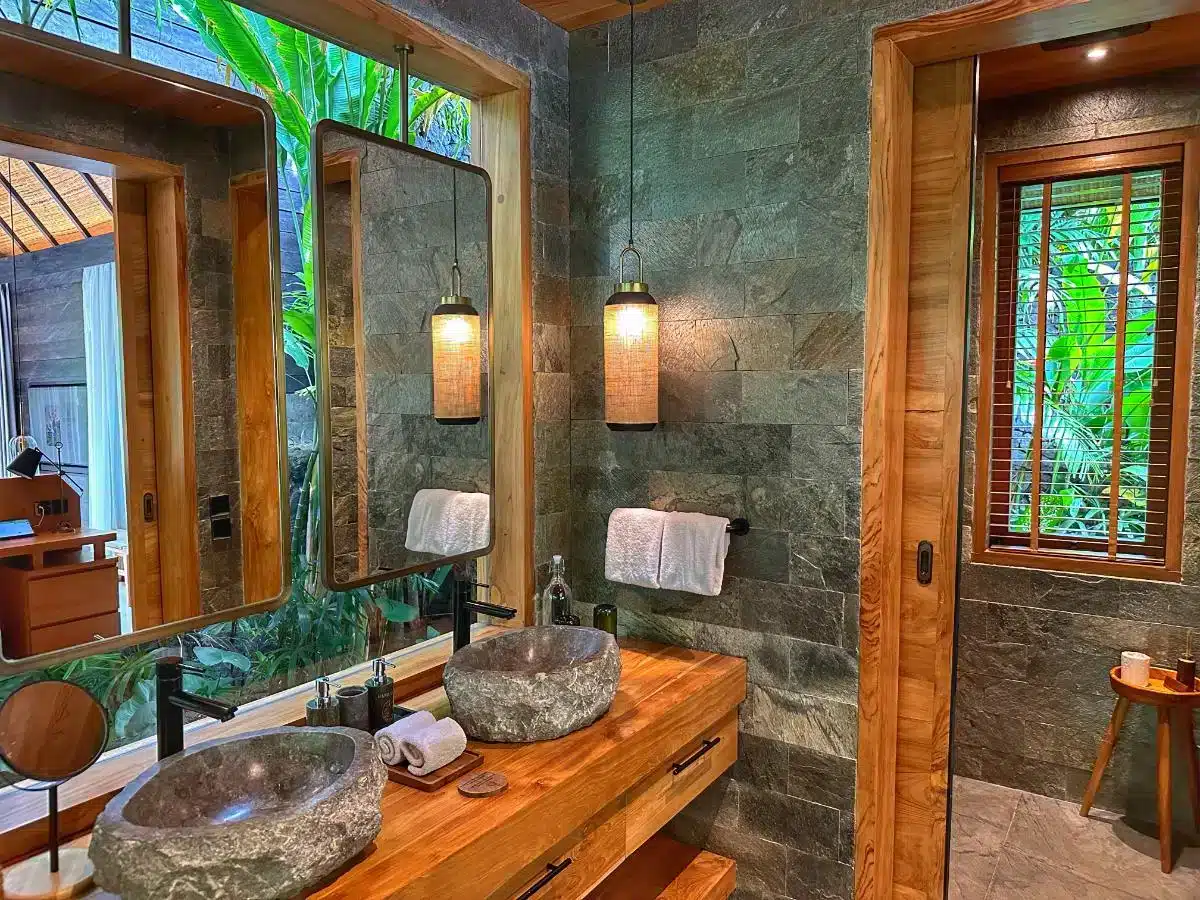
The bathroom is spacious and thoughtfully designed.
Amenities include a bamboo toothbrush, charcoal toothpaste, natural mosquito repellent, and comfortable bathrobes.
One of the most memorable features is the shower, which opens through a glass door toward the garden. Showering here feels almost like standing outdoors in a tropical setting.
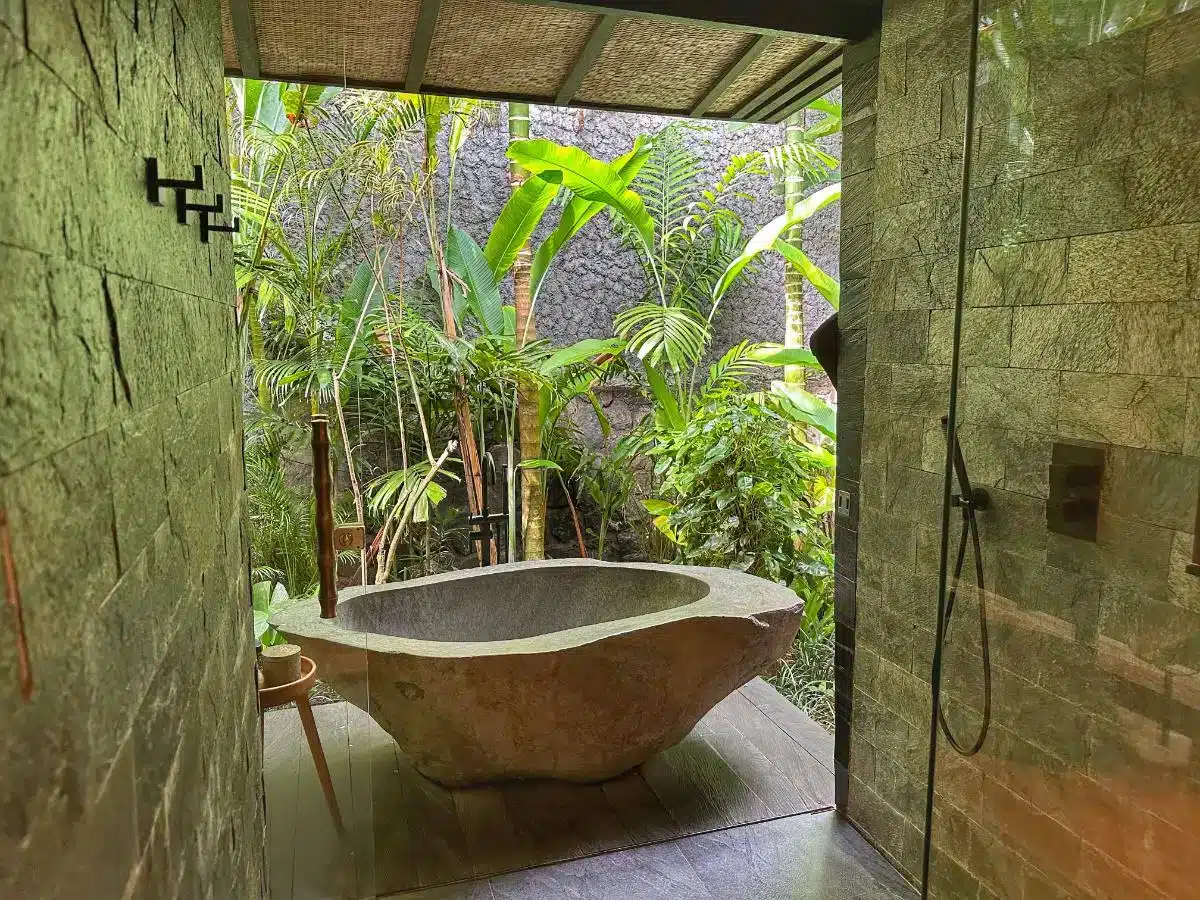
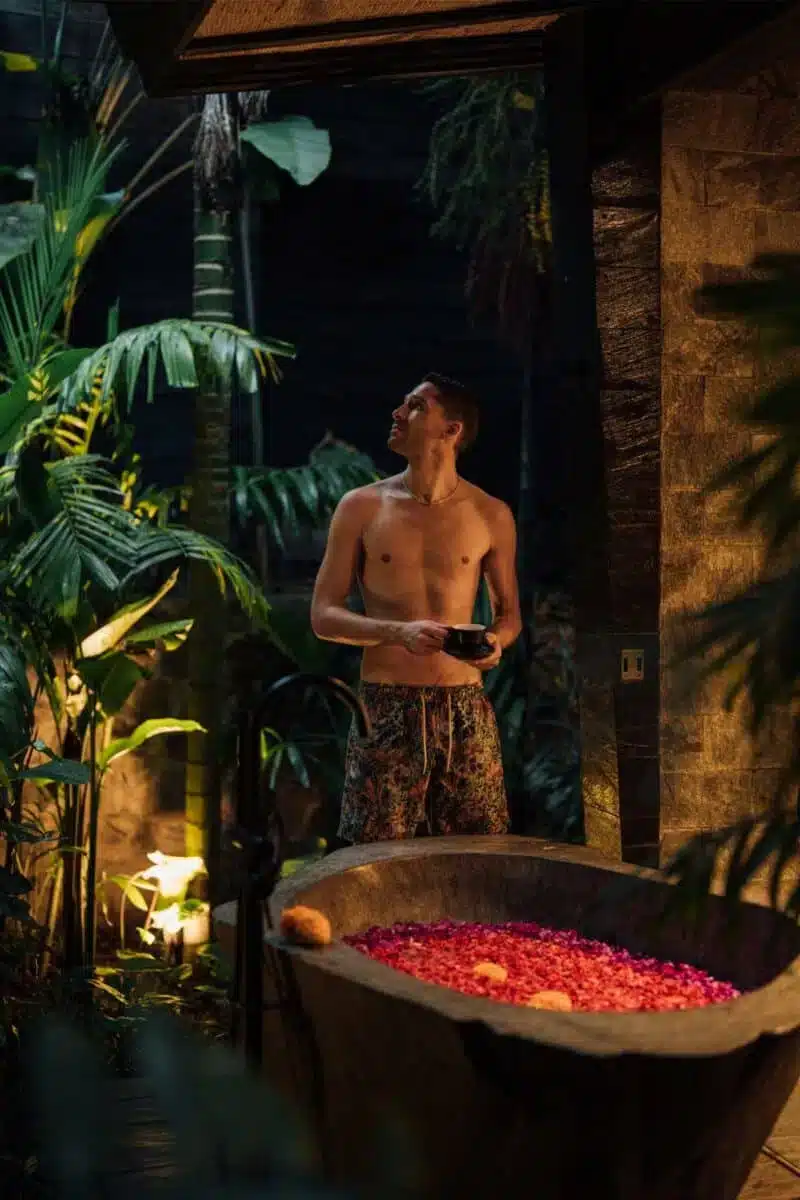
But my personal highlight was the outdoor bathtub.
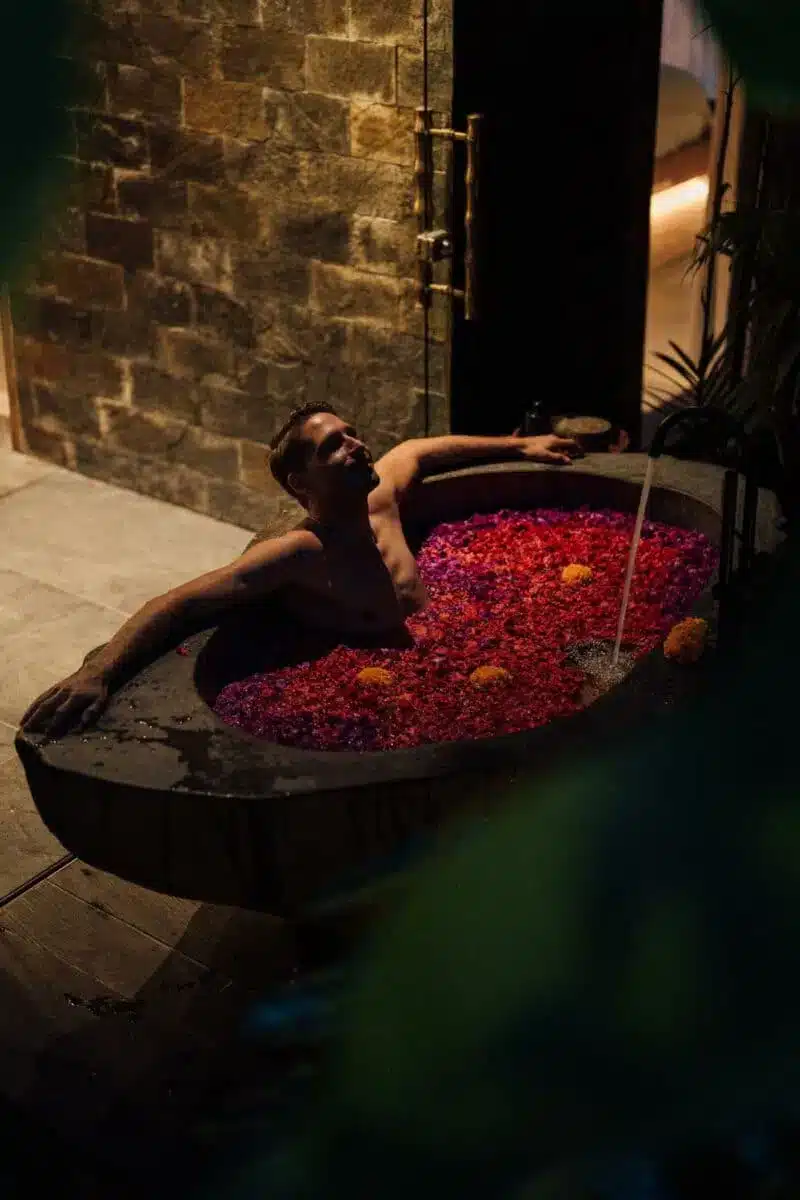
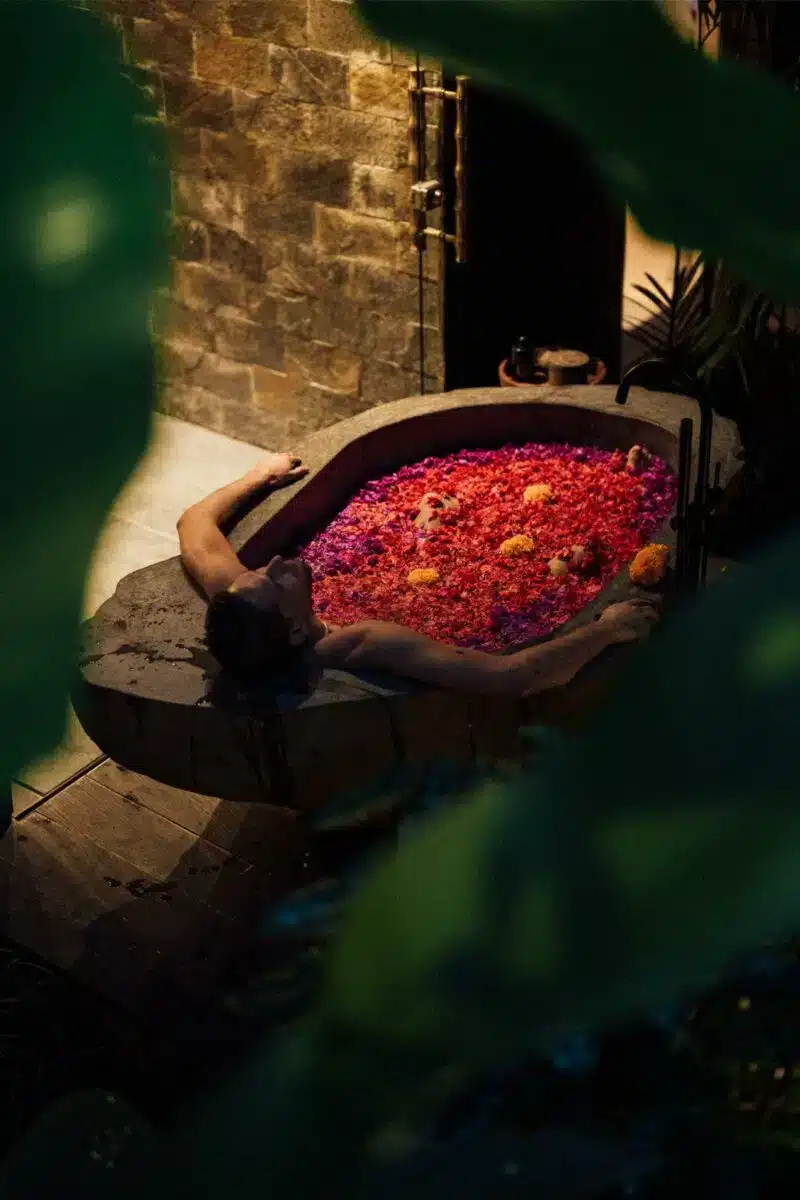
One evening, the hotel prepared a flower bath, which turned out to be one of those classic Bali experiences that genuinely lives up to expectations.
Warm lighting, fragrant flowers, and the quiet garden surroundings create a wonderfully relaxing atmosphere.
The Private Garden and Plunge Pool
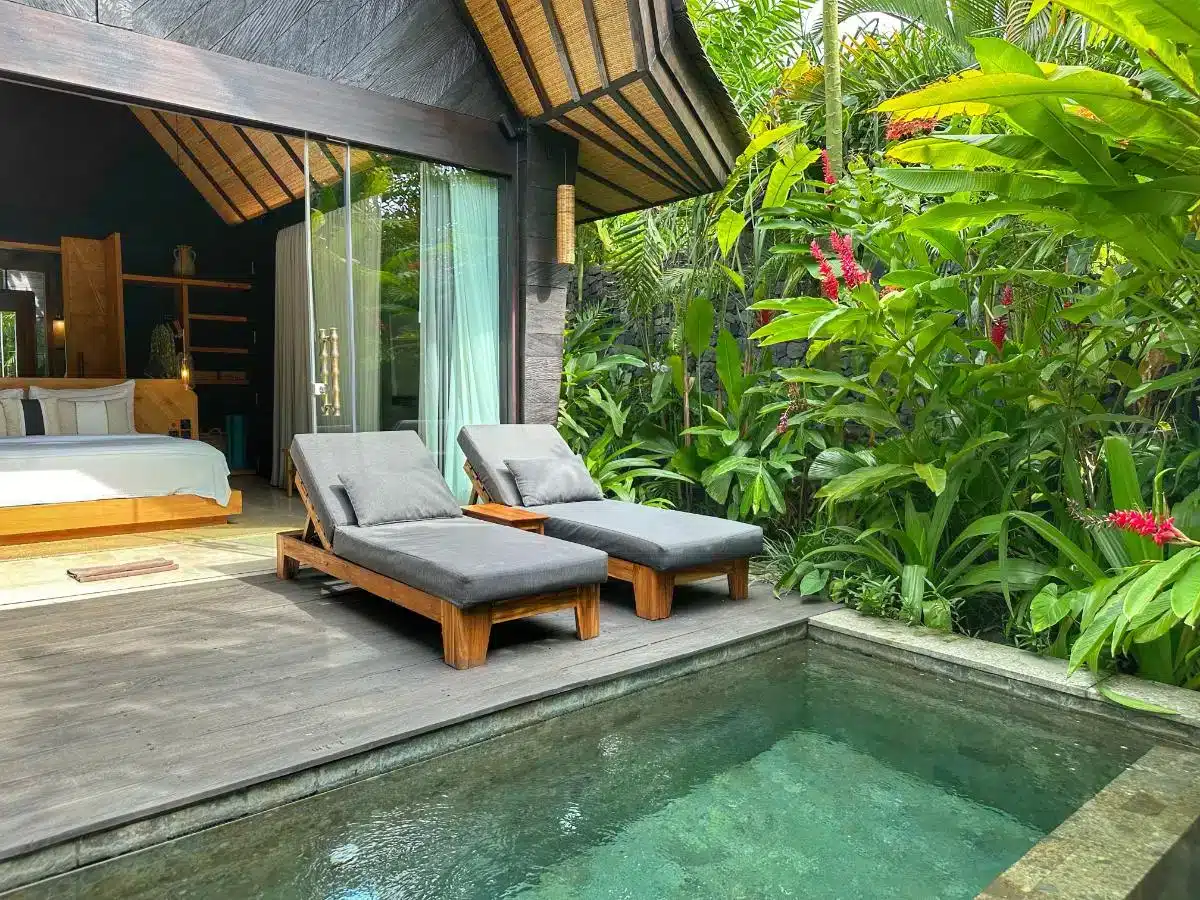
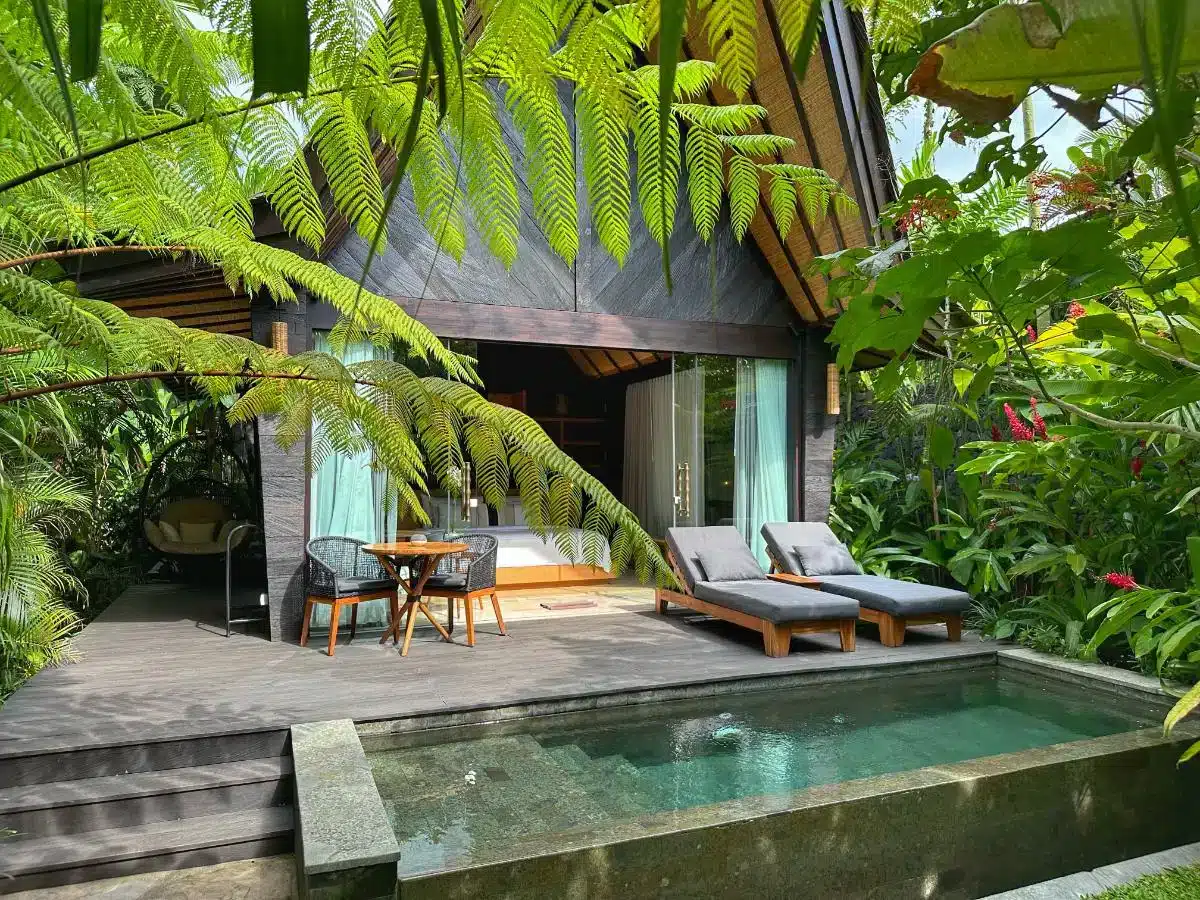
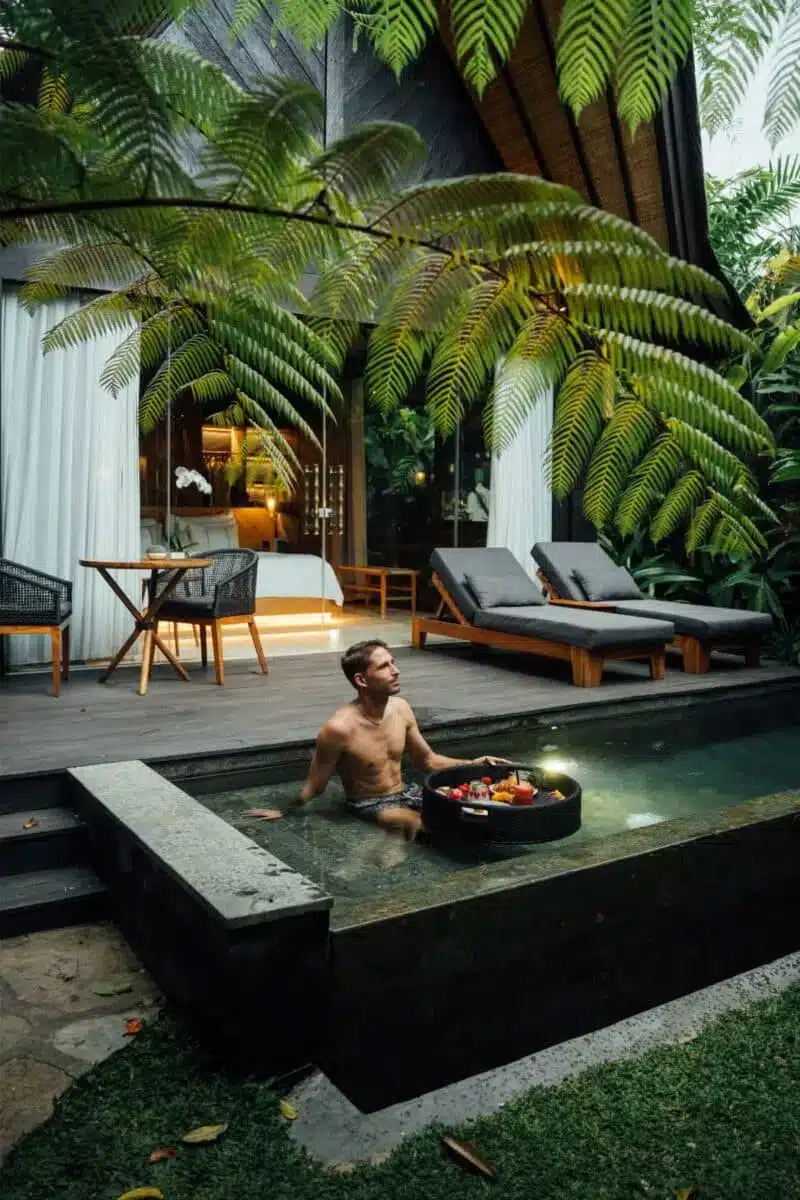
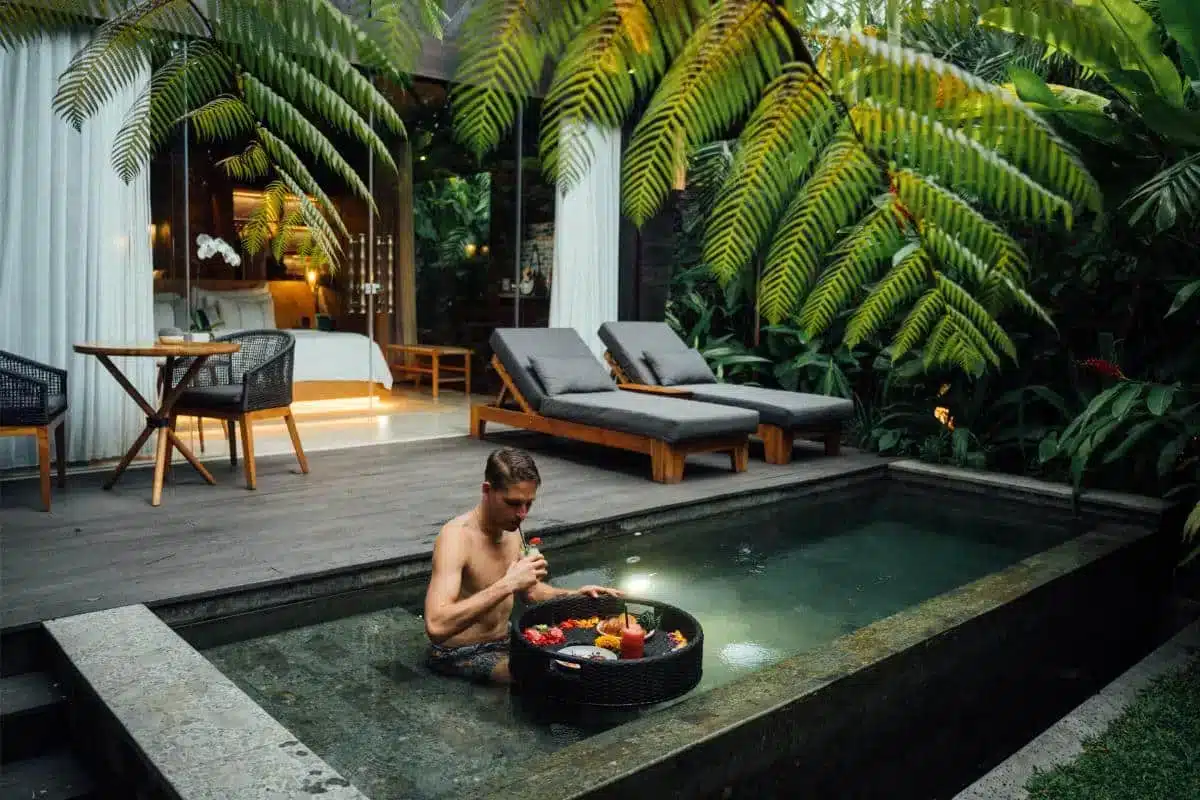
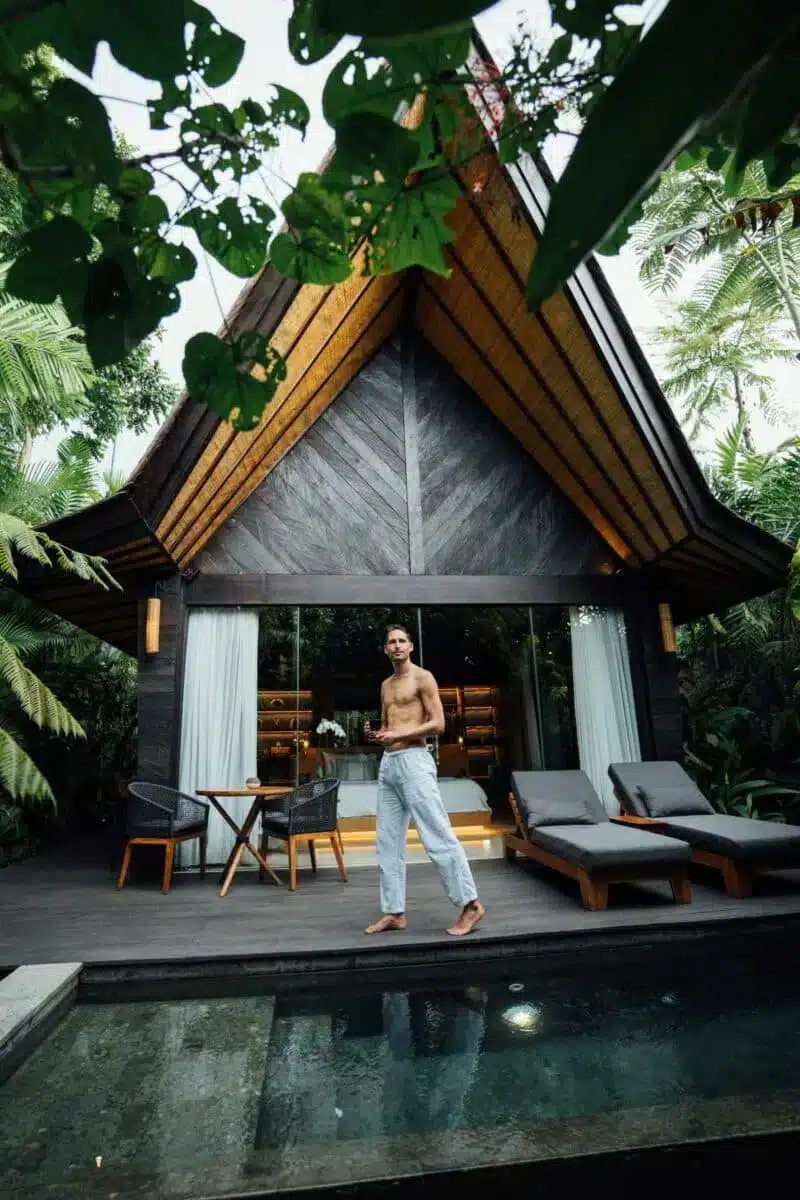
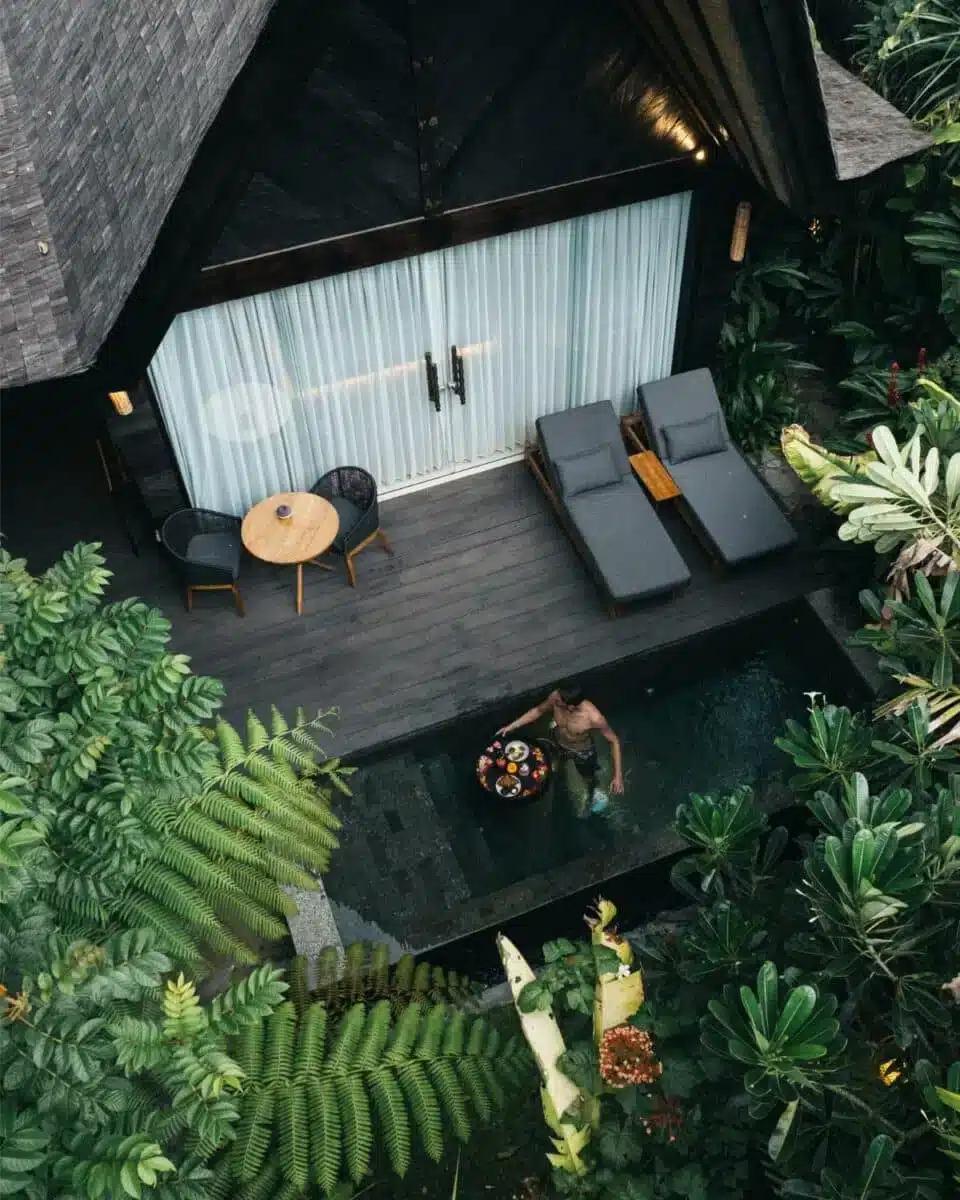
Sliding glass doors open directly onto a terrace with sunbeds and a small table where breakfast or afternoon tea can be enjoyed.
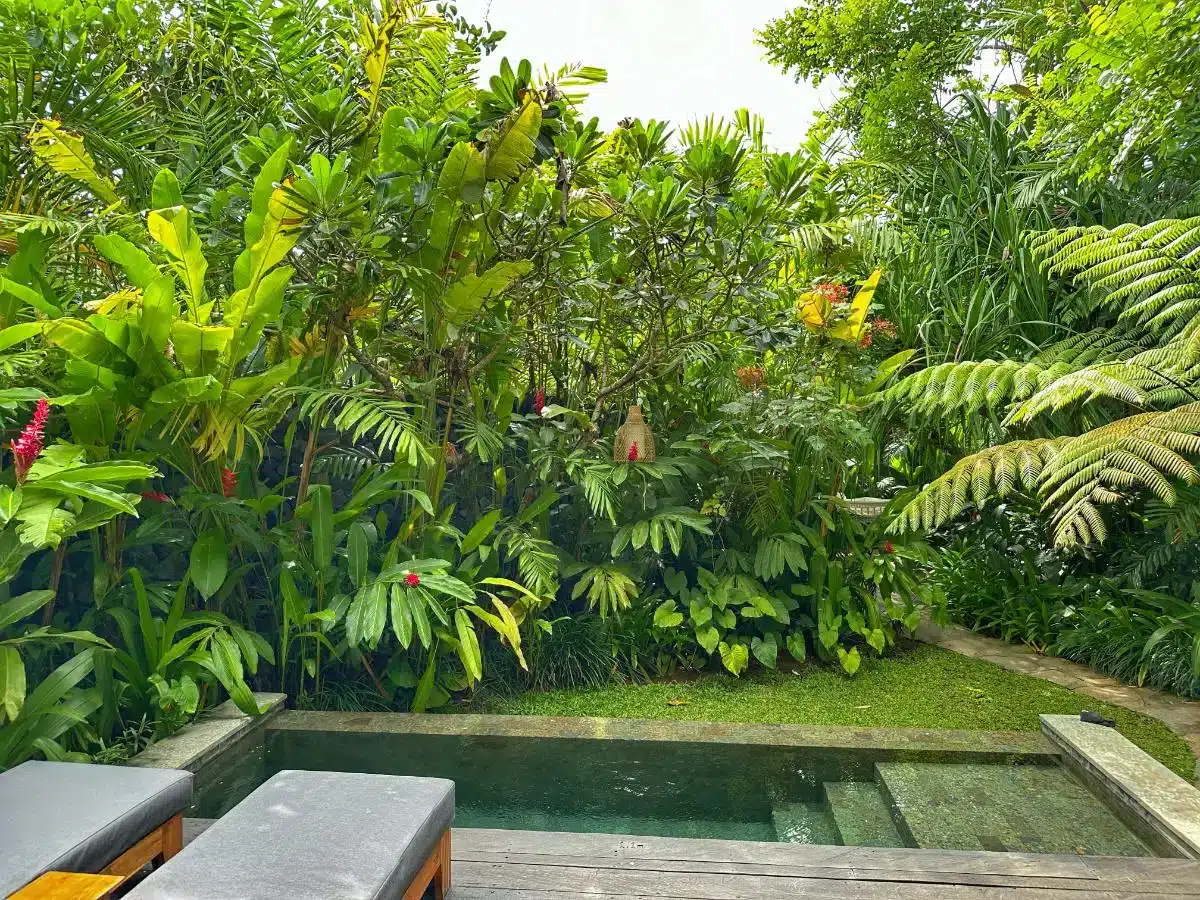
The plunge pool sits in the middle of the garden, surrounded by lush tropical plants.
Despite being relatively close to Canggu, it was remarkably quiet here. Most of the time, the only sounds were birds and water gently flowing over the edge of the pool.
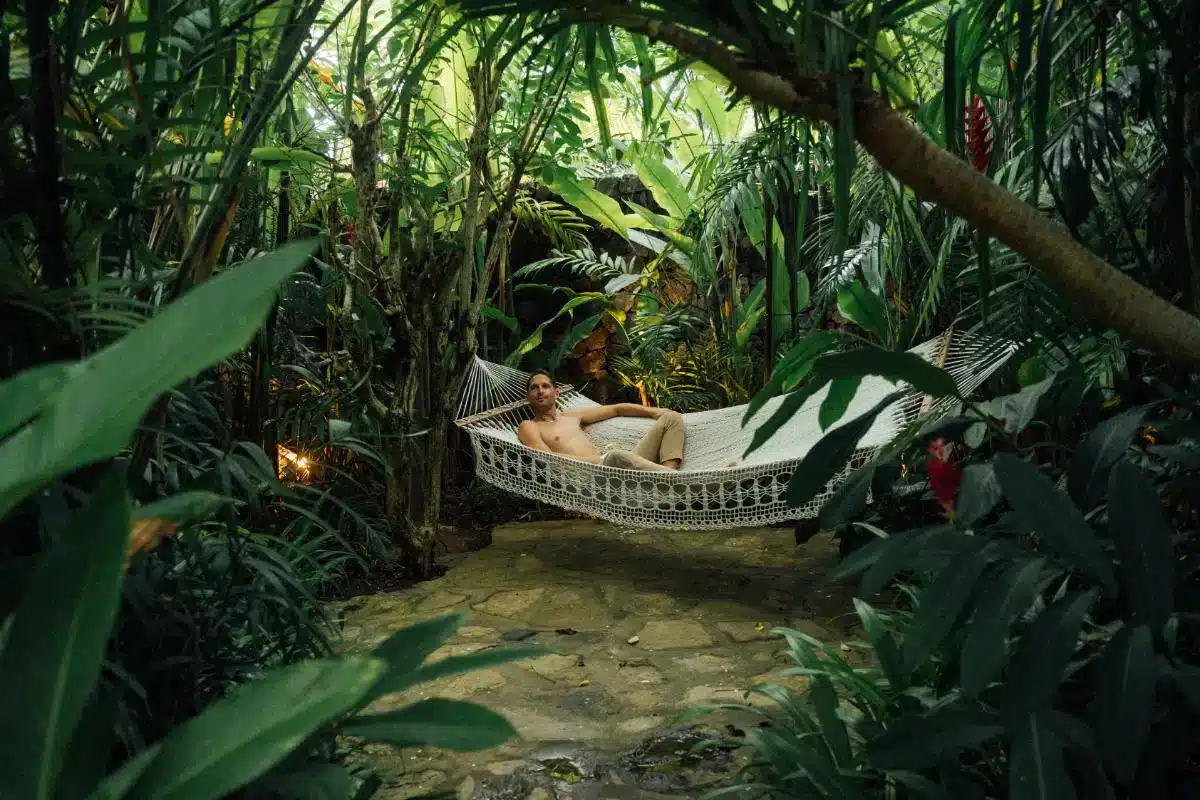
The Premium Jabu villas also include a hammock in the garden, which quickly became one of my favourite places to relax, read, or take an afternoon nap.



Dining at Ijo by Desa Hay
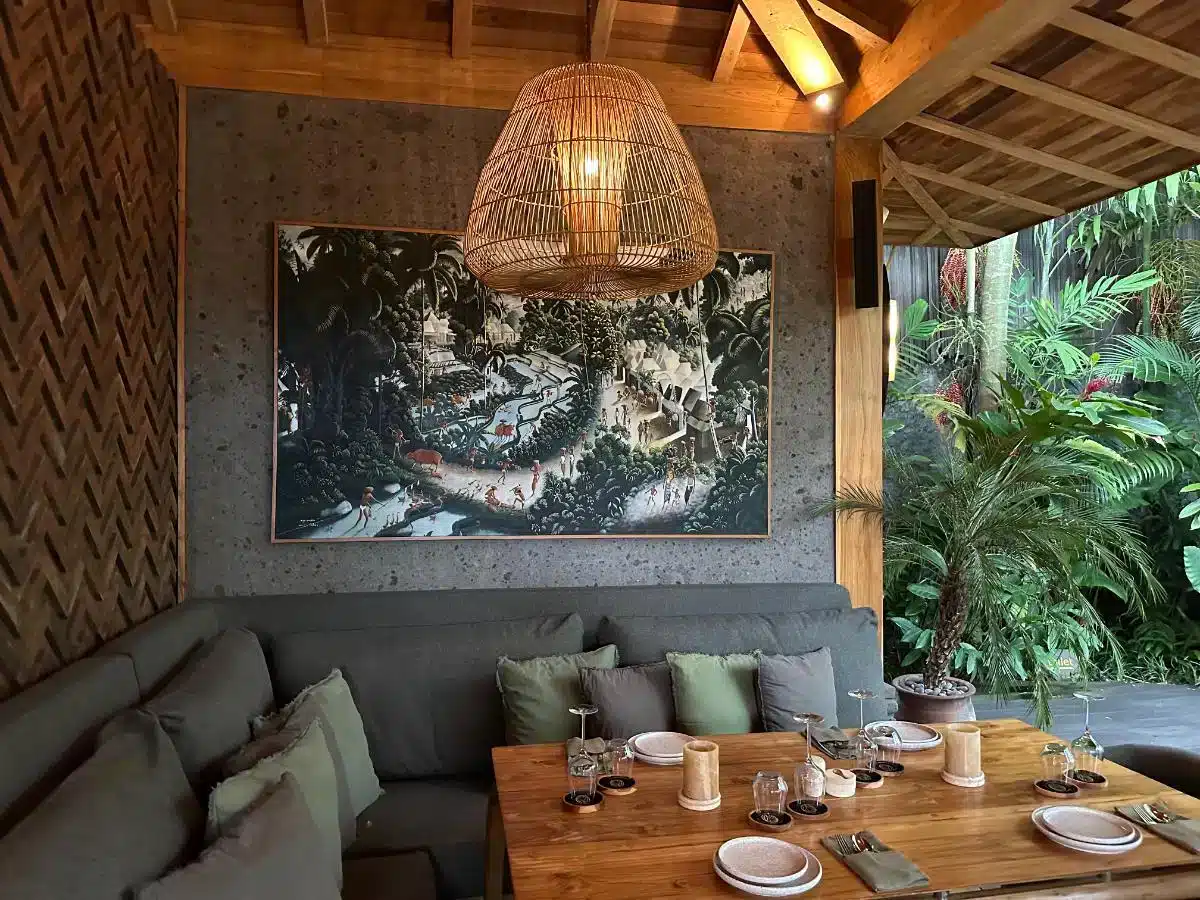
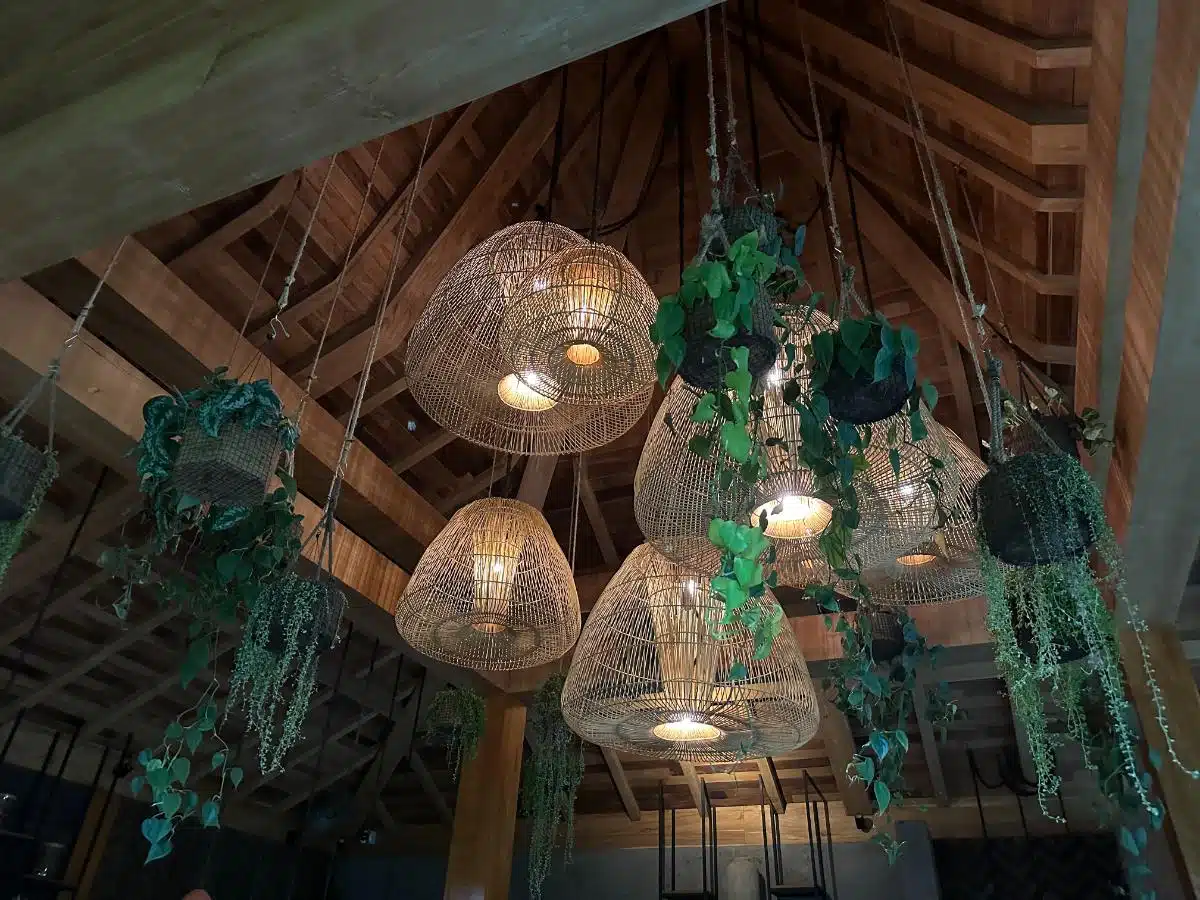
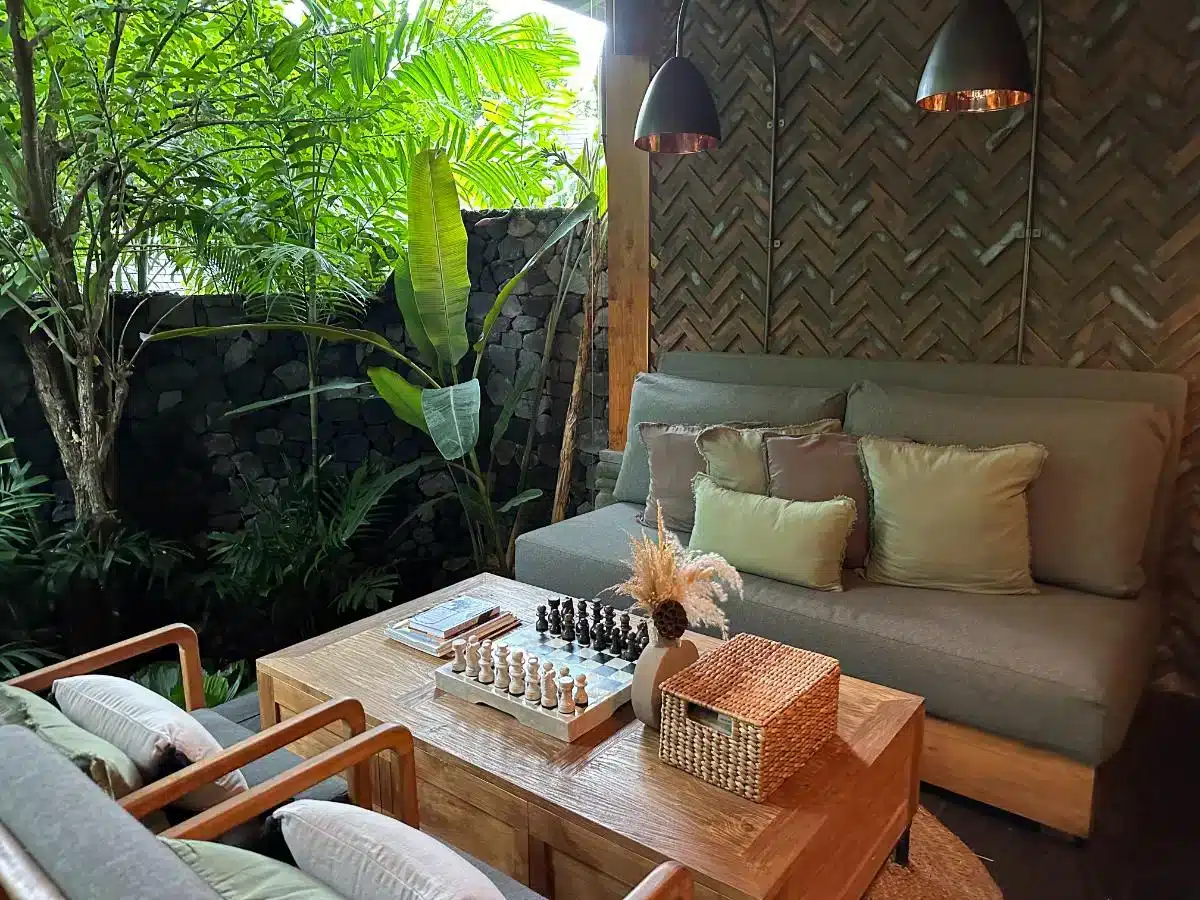
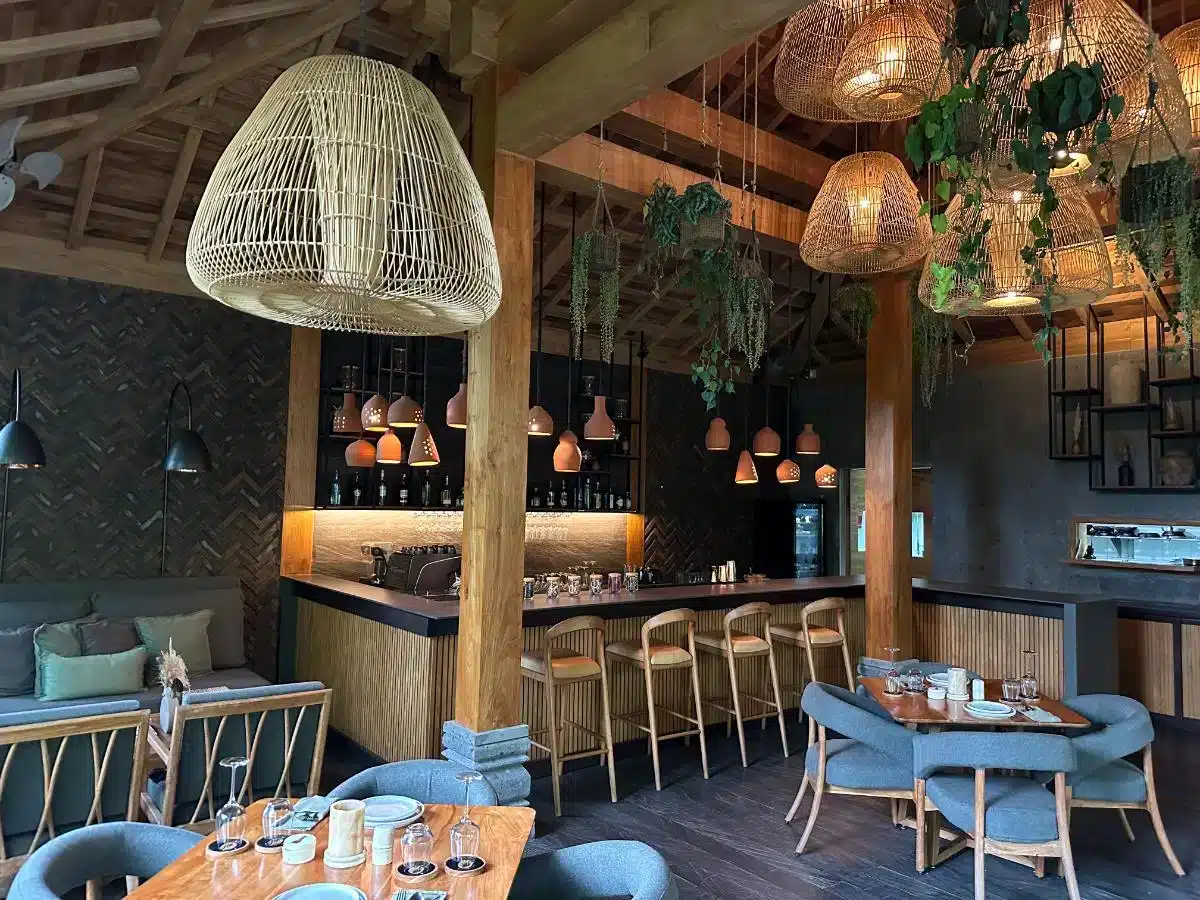
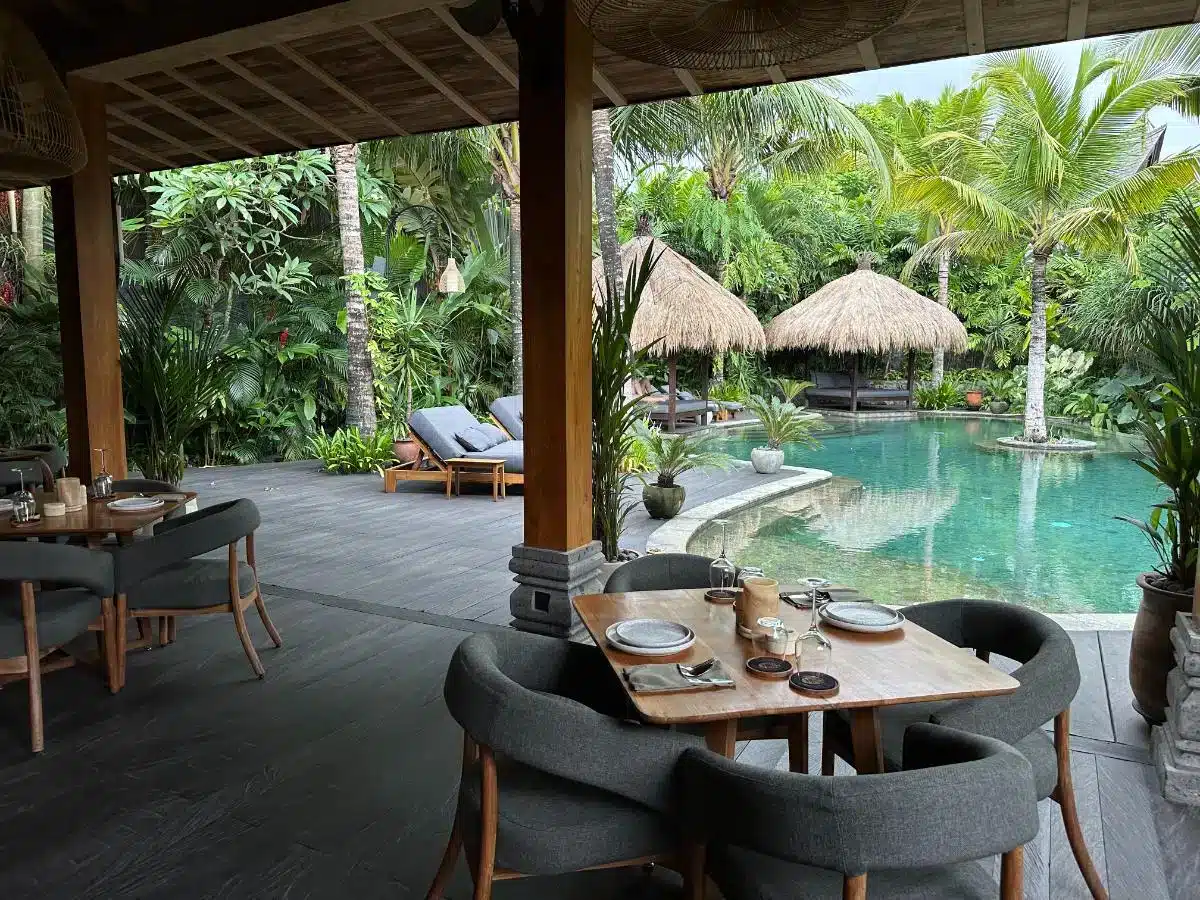
The hotel restaurant, Ijo by Desa Hay, sits beside the pool and features a relaxed open-air design.
For dinner, I ordered the Sulawesi grilled ribs, served with peanut sauce, tomato salad, and mashed potatoes. The meat was incredibly tender and practically fell off the bone.
Breakfast was equally enjoyable.
My favourite dish was sourdough bread topped with guacamole, poached eggs, and salmon, fresh, satisfying, and a great way to start the day with steady energy.
The kitchen focuses on fresh ingredients and relatively balanced meals. For guests arriving late, lighter dishes and breakfast options make it possible to eat without feeling overly heavy.
Morning Yoga
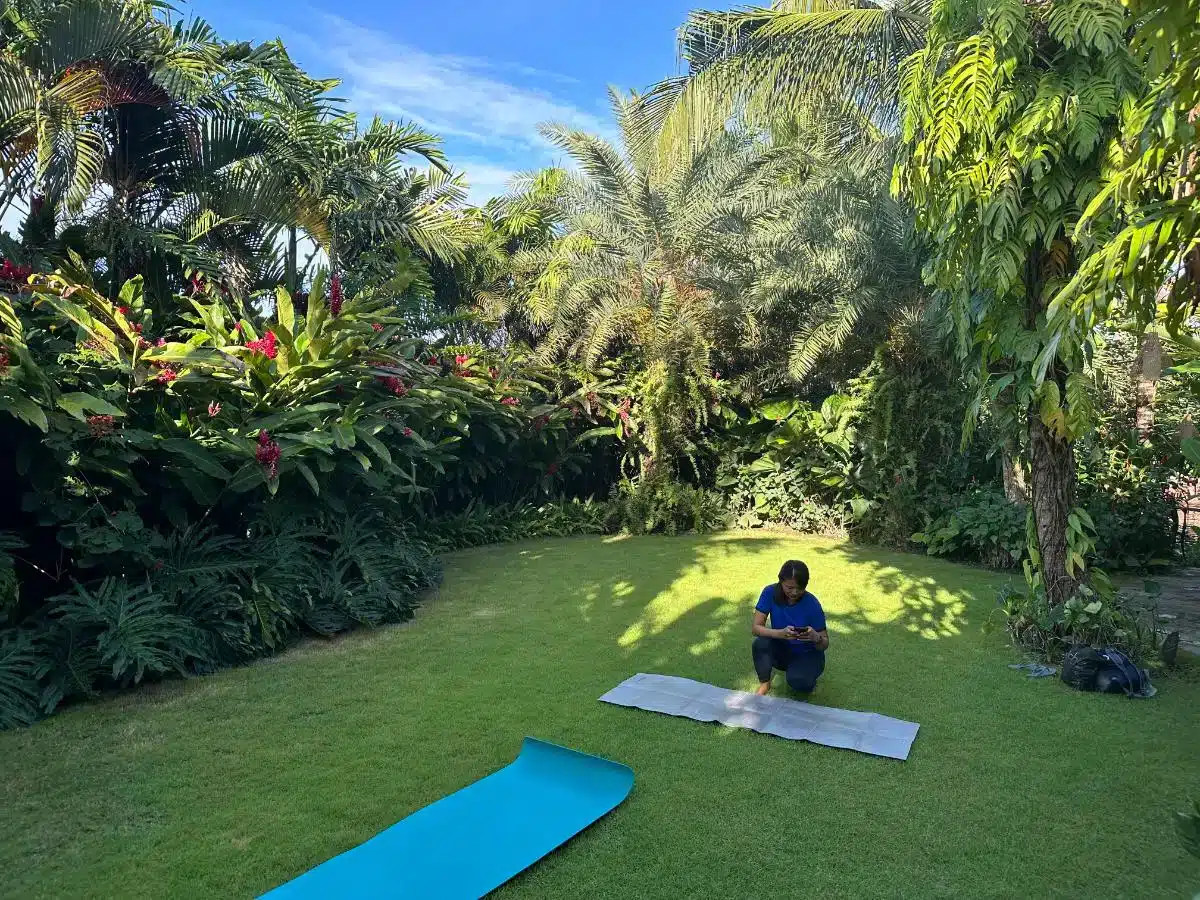
Every morning, the hotel offers a complimentary yoga session from 8 to 9 AM.
When the weather allows, the class takes place in the garden. If it rains, it moves to the restaurant area or sometimes to a villa space.
The sessions are relaxed and suitable for beginners, making them a pleasant way to start the day, even if yoga is not normally part of your routine.
Sustainability

One of the things that stood out during my stay was the hotel’s clear commitment to sustainability.
Desa Hay integrates environmentally responsible practices into many aspects of the property.
Some of the key initiatives include:
- generating solar energy through 105 solar panels
- improving water sustainability through recharge wells
- reducing waste by focusing on recyclable and compostable materials
The property also supports the local community through employment and educational initiatives such as scholarships.
Recovery and Movement Infrastructure
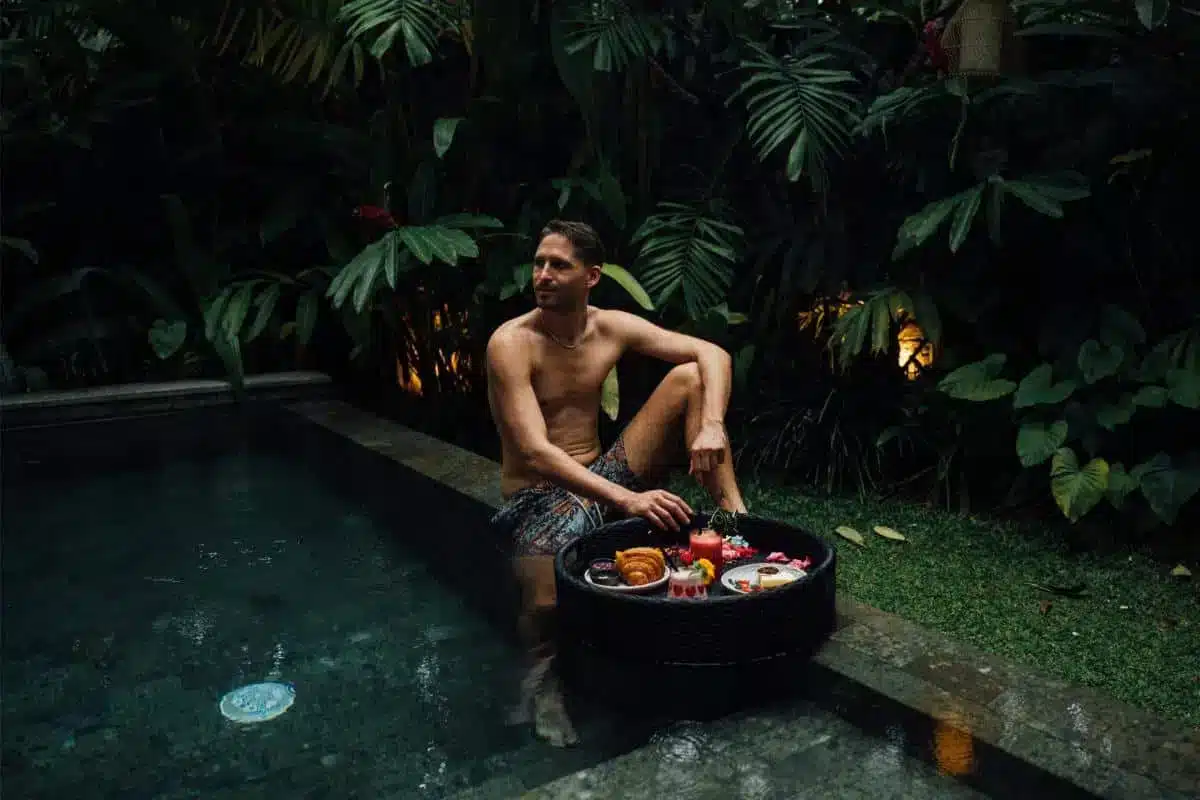
Desa Hay is not designed as a full wellness or medical spa destination.
The property does not offer thermal circuits, cold plunges, or structured recovery treatments typically found at larger wellness resorts.
Movement infrastructure is also intentionally minimal. Apart from the morning yoga sessions, there are no dedicated fitness facilities or training areas.
However, the calm surroundings, gardens, and private villas still provide space for gentle movement, stretching, or relaxation during the day.
Frictionless Service
One operational detail stood out throughout my stay: communication with the staff happens through a private WhatsApp group.
From the moment you arrive, all departments are reachable through a simple message.
Requests are answered quickly and clearly, which removes many small logistical frictions that can interrupt relaxation during a hotel stay.
Check-in and coordination during the stay felt smooth and straightforward, and the team was consistently attentive without feeling intrusive.
Things to do nearby
Although Desa Hay feels secluded, many of Bali’s well-known attractions are within easy reach.
Nearby highlights include:
- Tanah Lot Temple — about 21 minutes by car
- La Brisa Beach Club — about 14 minutes by car
- Ubud Monkey Forest — around one hour away
- Tegallalang Rice Terraces — approximately 1 hour 20 minutes by car
Who This Stay Is For
Ideal Guest
Desa Hay is particularly well-suited for travelers who want to stay close to Canggu while escaping its constant stimulation.
Couples, solo travelers, and remote workers looking for a quiet villa environment where they can sleep well and slow down will likely benefit most from the setting.
Wrong Fit
Travelers seeking a highly social atmosphere, nightlife, or large wellness resorts with extensive spa and fitness facilities may find the property too calm.
Verdict
My stay at Desa Hay was genuinely restorative.
Sleep quality was excellent, the private villa design created a peaceful environment, and the quiet gardens made it easy to slow down and unwind.
Energy throughout the stay remained stable thanks to comfortable accommodation, balanced meals, and the calm surroundings.
For travelers who want to enjoy Canggu without being immersed in its constant energy, Desa Hay offers a thoughtful balance between accessibility and tranquility.
At $200–350 per night, the value proposition is strong. You’re not paying for a spa programme or fitness centre, you’re paying for privacy, sleep quality, and an environment that genuinely allows you to switch off. For what it delivers, the price is fair and competitive against comparable boutique properties in the Canggu area.
You leave feeling relaxed rather than needing another vacation to recover.
Frequently Asked Questions
Book Desa Hay Bali
From ~$200/night for a Premium Jabu Villa with private plunge pool near Canggu.
What is the Restorative Index score for Desa Hay Bali?
Desa Hay Bali scores 88 out of 100 on the Restorative Index, a wellness hotel evaluation framework that measures six dimensions: Sleep Architecture (30/30), Environmental Calm (20/20), Nutritional Impact (14/15), Bioregulation and Spa (7/15), Biomechanics and Movement (7/10), and Frictionless Operations (10/10). The score reflects a property that excels in sleep quality and operational smoothness, with room for growth in its spa and movement programming.
Is Desa Hay Bali worth the price?
Desa Hay Bali is positioned in the upper-mid range for Bali wellness properties, with premium pool villas starting around $350–450 per night. For what you get, an exceptional sleep environment, high-quality plant-forward cuisine at Ijo restaurant, daily yoga, and genuinely peaceful surroundings just minutes from Canggu, it represents strong value compared to ultra-luxury wellness resorts in Bali that charge $800+ for similar fundamentals. The property justifies its price through substance rather than spectacle.
How far is Desa Hay Bali from Canggu and the airport?
Desa Hay is located approximately 10 minutes from central Canggu by scooter or car, giving guests easy access to restaurants, cafés, and surf beaches while remaining in a quiet, rice-field setting. Ngurah Rai International Airport is roughly 45–60 minutes away, depending on traffic. The hotel can arrange private airport transfers.
What makes Desa Hay Bali different from other wellness hotels in Bali?
Desa Hay stands apart through its design-led approach to restorative wellness. Rather than offering a lengthy spa menu or clinical treatments, the property embeds wellness into the architecture itself, natural ventilation, blackout-capable rooms, open-air living spaces, and a layout that encourages walking and stillness. The on-site restaurant Ijo serves plant-forward cuisine with ingredients sourced from local farms, and the daily yoga program is included. It appeals to travelers who want wellness woven into the stay rather than sold as add-on packages.
Does Desa Hay Bali have a spa?
The property’s wellness proposition centers more on environmental design, sleep quality, and nutrition than on a traditional spa experience. Guests seeking extensive spa facilities may want to complement their stay with visits to nearby Canggu wellness centers.


Disclaimer: I was a guest at Desa Hay Bali. As always, my opinions are solely my own.



Tim Kroeger is a luxury wellness travel and longevity editor and creator of The Restorative Index. Drawing on 15+ years of travel across 112+ countries and 230+ nights assessed using his framework, he reviews hotels through one question: Did you leave feeling better than when you arrived?
A former Lufthansa flight attendant and endurance traveler, Tim documents his longevity journey as Founding Ambassador of Healthi Life Longevity House in Bangkok. He appeared in ZDF’s Forever Young in Thailand documentary.
Read how 15 years of full-time travel, burnout, and one afternoon in Fiji led Tim to rethink luxury and create the Restorative Index: Read Tim’s story →



One Comment