
If you’ve ever slept “8 hours” in a hotel and still woken up wrecked, it wasn’t you. It was the room. Here’s what experts say actually drives recovery: sleep, sound, and light, and the mistakes hotels keep making.
In a world where “wellness rooms” are often defined by aesthetics, guests are asking for something simpler and far more valuable: real recovery.
The kind you feel the next morning in your sleep depth, your mood, and how quickly your body downshifts after travel.
Across hotels, resorts, and design studios, one theme keeps showing up in practice: the biggest wins rarely come from adding more “wellness.”
They come from removing sensory friction, light leaks, sound bleed, harsh illumination, and the constant micro-stress that keeps the nervous system on alert.
Below are expert perspectives from operators and designers on what recovery-first rooms actually require, with a focus on sleep, sound, and light.
The non-negotiables: sleep, sound, light

Recovery-first Wellness room at The Retreat Koh Chang in Thailand
A “recovery-first” room isn’t about adding wellness features. It’s about getting the basics right, so your body can actually switch off.
1) Darkness (real blackout)
Not just heavy curtains. Proper blackout that seals the edges, blocks early sun, and stops outside glow from bleeding into the room.
2) Silence (less sound bleed)
Not “quiet vibes.” Actual noise control, especially from corridors, doors, elevators, and the room next door.
3) Light control (no harsh overheads)
Guests should be able to move around at night with soft, low-glare lighting, without turning on bright ceiling lights that snap them fully awake.
The common thread: recovery isn’t a feature. It’s an environment.
Expert insights
1. Nowdla Keefe – Eliminating artificial noise and light
Nowdla Keefe, Manager at Namale Resort & Spa
We are noticing a huge trend shift in how people want to spend their hard-earned vacations. There is absolutely no doubt that rest vacations and vacations focused on wellness and recovery are on the rise.
The single most impactful change that can be made for guest recovery is eliminating artificial noise and light completely.
At Namale, our bures and villas are intentionally built for more than just aesthetics, but for insulation from both sound and light. You fall asleep to ocean waves, not hallway echoes or screen glare. Guests consistently say it is the best sleep they remember having in years.
One mistake I see in wellness rooms overall is focusing too much on tech. True rest comes from silence and a thoughtful layout. Our approach is simple but deeply restorative, and that is what our guests remember most.
2. Rachel Melvald – Removing sensory overload
Rachel Melvald, Founder, Psychitecture.com
The biggest change that most improves guest sleep and recovery isn’t adding “wellness features”, it’s removing sensory overload.
When guests are stressed (or healing), the nervous system can sit in fight-or-flight, and the brain keeps scanning for threat. Excess light, noise, and visual stimulation make true rest much harder.
Practically, that means upgrading the basics: better door seals, soft-close hardware, and acoustic measures that reduce hallway, elevator, and adjacent-room noise. It also means true blackout wall-to-wall, ceiling-mounted curtains, and eliminating “hidden” light sources like LED glows from thermostats, electronics, or buzzing devices that create low-grade stimulation at night.
On the lighting side, we recommend removing harsh overhead lighting near the bed and using low-level, warm lighting instead (for example, amber bedside lamps) so the room supports wind-down rather than alertness.
Most common mistake: adding more stimulation (gadgets, “wellness” add-ons, even excessive features) instead of subtracting friction and sensory demand.
3. Alex Kuby – Acoustic separation
Alex Kuby, Associate Principal at DyeLot Interiors
One design change that most improved guest recovery: Acoustic separation paired with layered, low-glare lighting control.
Why it works: True recovery is interrupted less by discomfort than by micro-stress. Sound bleed from corridors, elevators, and adjacent rooms keeps the nervous system in a state of alert, even when guests are asleep.
Similarly, overhead lighting and uncontrolled light spill disrupt circadian rhythms. When rooms are designed with acoustic buffering at doors, headwalls, and party walls, and lighting is layered so guests can move through the room without harsh illumination, the body is allowed to downshift. This is not about aesthetics; it is about reducing sensory demand so recovery can occur passively.
Real-world example: At Hotel De Novo, a Tapestry Collection by Hilton property in Springdale, Utah, DyeLot focused on reducing sensory friction in the guestroom rather than adding wellness-branded features.


The design team prioritized acoustic buffering at corridor-facing walls and doors, minimized reflective surfaces near the bed, and introduced layered lighting that indirectly illuminates walls from concealed sources in the millwork to allow guests to move through the room at night without activating overhead fixtures.
Window treatments were detailed to fully darken the room, accounting for early desert sun and exterior ambient light. These interventions were subtle, operationally durable, and invisible when done correctly, but they fundamentally changed how the room supported rest and recovery after a day in Zion National Park.
Most common mistake: Treating wellness as an additive program rather than subtracting friction. A room that truly supports recovery is quieter, darker, simpler, and more forgiving.
4. James Kuester – Adding blackout shades
James Kuester, Principal at Küster Design

The most significant change we’ve made in our guest room design is the addition of blackout shades alongside the existing window treatments. This upgrade has greatly improved the guest experience by creating a darker, more restful sleeping environment.
One of the features guests comment on most is the ability to fully control the amount of light in their room. At the Blenman Inn in Tucson, AZ, for example, the shades are even powered by remote control, making them effortless for guests to operate.
Shay Howell, Operations Manager, says, “Guests regularly comment on how much better they sleep being able to block out the bright, Arizona sun at night.”
At San Gabriel House in Georgetown, TX, guests often admire the beauty of the updated window treatments, but, as Innkeeper Danni Babik notes, “…they always comment on how appreciative they are of the fully adjustable room-darkening shades.
What actually worked: the pattern across these experts
Across four different perspectives, the most effective recovery-first interventions are remarkably consistent:
- Make darkness total (and controllable). Not “nice curtains,” but blackout that accounts for edge leaks and ambient exterior light, plus simple controls guests will actually use.
- Treat noise like a design problem, not a guest complaint. Corridor-facing walls, doors, headwalls, and party walls matter. Sound bleed keeps the nervous system in a state of alert even when the guest thinks they’re asleep.
- Swap harsh overheads for layered, low-glare lighting. Guests need a night pathway that doesn’t spike alertness, indirect illumination, warm bedside options, and reduced glare near the bed.
- The best interventions are often invisible when done right, subtle upgrades that reduce sensory demand without adding complexity.
- The consistent warning: “wellness rooms” fail when they add features without removing what interrupts rest.
The most common “wellness room” mistake
The most repeated critique is blunt: hotels treat wellness as an additive.
They add tech. Add gadgets. Add features. Add aesthetics.
But if the room still has light leaking around the curtains, sound bleeding from the hallway, glare near the bed, and a night lighting setup that forces guests to blast overheads, then the guest’s physiology stays on alert. The result: a room that looks like wellness and performs like any other.
A recovery-first room is usually quieter, darker, simpler, and more forgiving.
Case study: Desa Hay Bali (in-room recovery basics done right)
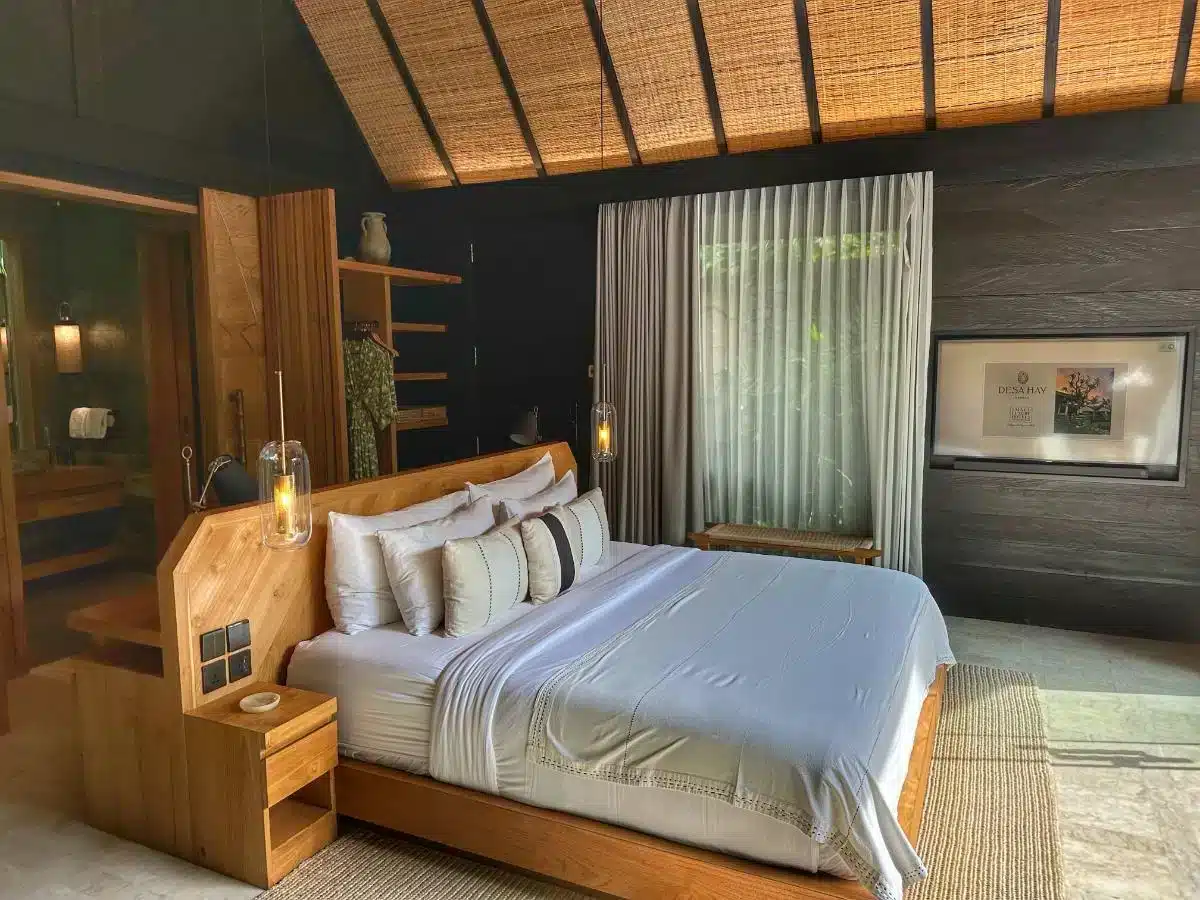
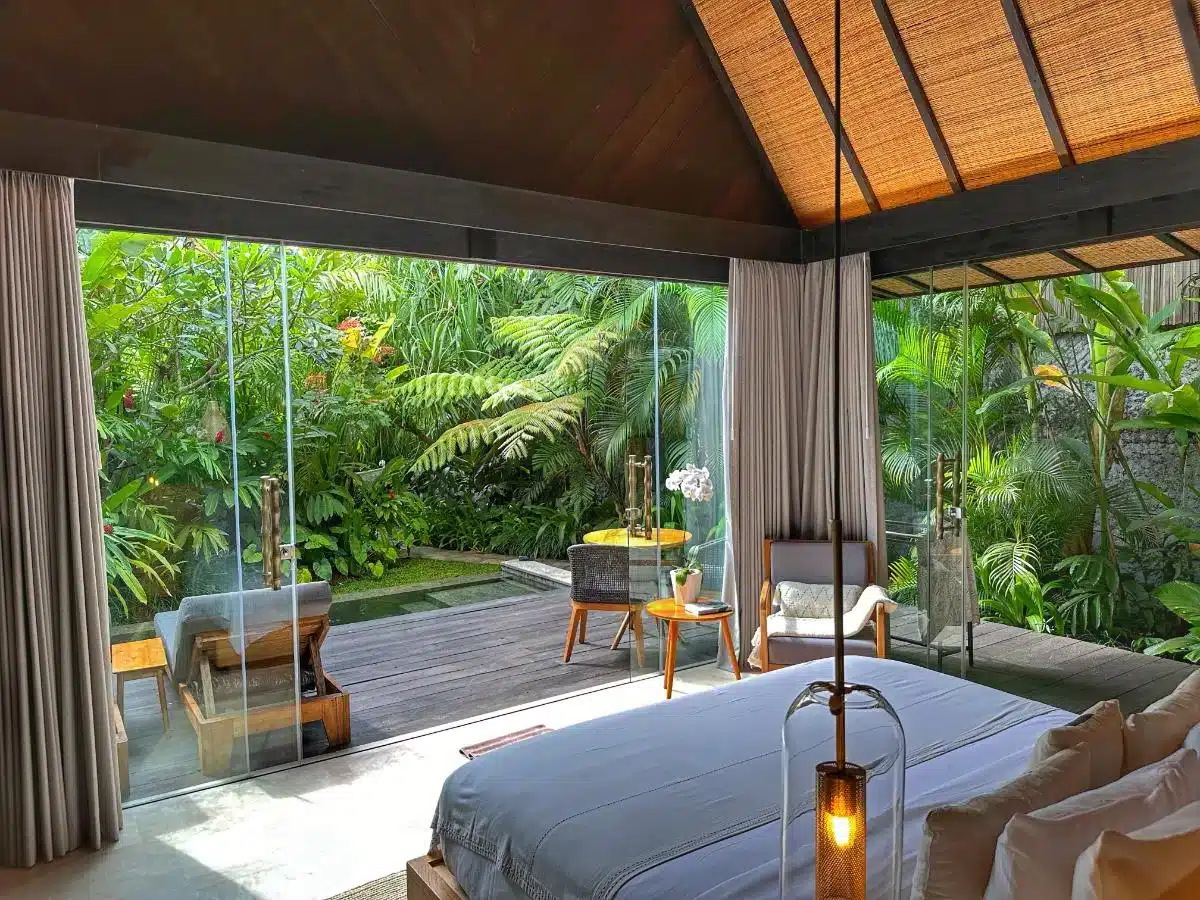
The photos above are from my villa at Desa Hay Bali, and it’s a clean example of what “recovery-first” looks like in practice.
Sleep quality came down to three basics done well: proper blackout (curtains that actually block morning light), near-total quiet (no noise bleed interrupting the night), and usable night lighting (soft enough to move around without resorting to harsh overheads).
That combination is exactly what the experts above keep pointing to. An environment that makes it easier for the nervous system to downshift and for sleep to stay intact.
Closing: what “recovery-first” really means
A recovery-first room isn’t a wellness aesthetic. It’s a room that lowers sensory demand so the nervous system can downshift, quiet, dark, and controlled in a way that makes rest happen almost automatically.

Tim Kroeger is a luxury wellness travel and longevity editor and creator of The Restorative Index. Drawing on 15+ years of travel across 112+ countries and 230+ nights assessed using his framework, he reviews hotels through one question: Did you leave feeling better than when you arrived?
A former Lufthansa flight attendant and endurance traveler, Tim documents his longevity journey as Founding Ambassador of Healthi Life Longevity House in Bangkok. He appeared in ZDF’s Forever Young in Thailand documentary.
Read how 15 years of full-time travel, burnout, and one afternoon in Fiji led Tim to rethink luxury and create the Restorative Index: Read Tim’s story →








One Comment