Tim’s Take: A vacation changes your location, not your decision load. Terry names something the wellness industry rarely admits, that beautiful is not the same as restorative, and the difference is what your nervous system actually feels on day four.
It wasn’t always dramatic or obvious. It usually crept in slowly, quietly, and steadily over time, and the signs were usually subtle.
Maybe a low, humming, consistent state of fatigue. Maybe it was the dreadful questions on what to eat for dinner. Maybe it was every notification that popped up on my phone. Maybe each commute to work that came with a sidedish of crushing anxiety and the question: “Am I going to be late again today?”
Or maybe it’s the entire thing. My whole life. All of it.
I was in full burnout mode between the ages of 30 and 40 years old. An entire decade.
Most of us find ourselves in this state at some point in life, especially as midlife approaches and the responsibilities are endless. From running businesses to taking care of families to aging parents to more responsibilities at home, bigger financial pressures, and everything in between. I was doing it all without realizing my nervous system was fried.
I desperately started seeking out anything that would help me.
An escape from my life, work, and myself.
And the options were endless.
From simple vacations all the way to divorce and an entire career change. I was up for all of it.
So I did what I always did. I booked trips. One on top of the other. From Spain to Greece, to Napa Valley, to Montreal, to Mexico. I would go anywhere.
I was good at booking trips. I would scroll through hotels at 11 p.m. and feel hopeful for the first time all week. This is it, I’d think. I just need to get out of here.
Somehow, the magical solution was always on the other side of that flight.
To my disappointment, it never worked that way.
The first 3 days of “vacation,” I was like a crack addict going into withdrawals. I couldn’t stop checking my phone, emails, messages, responding to clients, and taking calls.
It was a cortisol addict who panicked over having to relinquish control and just relax. It felt uncomfortable having “nothing to do.”
So instead, I would cling to my old patterns.
By day 3, things would feel a bit more settled, but I was still surgically attached to my phone and the stress that came with it.
Or I’d be at breakfast, and my mind would already be three moves ahead. What time are we leaving? Should I book the excursion now or wait? Did I respond to that email? My phone would end up in my hand again without me noticing. I’d be sitting across from someone I love at dinner, and I wasn’t quite there. Present in body, a million browser tabs open in the head.
It took me an embarrassingly long time and many trips to figure out why. 5 years to be exact.
It Wasn’t the Destination. It Was Me And My Brain.
I wasn’t just physically tired. I was cognitively and emotionally shot. My nervous system fried. I was making, and I’d estimate I’m lowballing this: somewhere around two hundred decisions before lunch.
What to wear. What to eat. What to say yes to. What to push. Who to call first. Whether the thing my son or daughter was telling me required a response or a nod. Whether my husband’s tone was a tone or I was reading into it. Whether to schedule the doctor’s appointment, I’d been avoiding. What the team should prioritize this quarter. Whether that font was right.
Researchers have a name for this. They call it decision-making fatigue. And once you know about it, you see it everywhere. It’s why judges make harsher rulings before lunch. It’s why Obama famously wore the same two suits. He said he didn’t want to waste a single brain cell on his wardrobe. It’s why you stand in front of the fridge at 9 p.m. and cannot, for the life of you, decide what to eat, even though you’re hungry.
Here’s the part nobody told me: a vacation doesn’t turn decision fatigue off. If anything, it turns it up.
On vacation, I was still deciding. Constantly. Where should we eat? Is this restaurant worth the drive? Should we try the snorkeling tour or just lay by the pool? What do you feel like doing today, honey — because I’d really rather not be the one who picks, but here I am picking again.
Every beautiful choice was still a choice. My nervous system didn’t know the difference between “pick a restaurant in Tulum” and “pick a vendor for the Q4 launch.” It was all just my brain, still on, still running.
By the end of most trips, I’d come home feeling like I needed another vacation to recover from my vacation. – Terry Tateossian
By the end of most trips, I’d come home feeling like I needed another vacation to recover from my vacation. Which, I realize now, is a joke we all make. But it’s not actually funny. It’s a symptom.
The First Time I Felt an Actual Reset
The first time I experienced something genuinely different, it didn’t look like what I expected.
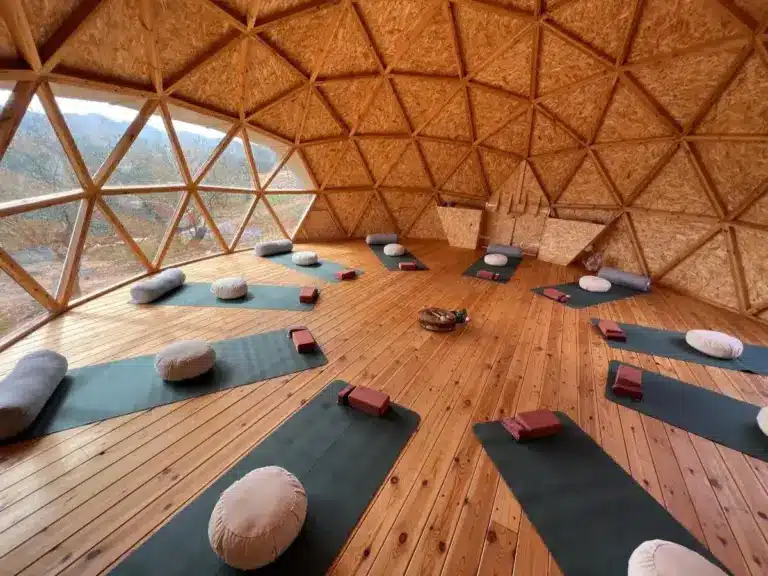
I’d signed up for a wellness retreat almost on a dare from a friend, the kind where somebody else decides when you eat, what you eat, when you stretch, and when you rest. I remember feeling annoyed in the first hour. I don’t like being told what to do. I like to be the one who plans things. That’s the whole problem, obviously, but I didn’t see it yet.
By day two, something weird happened. I woke up, and I didn’t check my phone. Not out of discipline. I just didn’t think of it. Somebody rang a quiet bell at 7 a.m. I ate what was in front of me. I went where they told me to go. I moved my body the way the teacher suggested. I didn’t pick a single thing, and it was the most rested I’d felt in maybe a decade.
That was the difference. That was the thing I’d been missing.
I wasn’t paying to be somewhere beautiful. I was paying not to be in charge for four days.
What I See in the Women I Work With
The older I get (I’m turning 50 this year), the more I notice the same thing in the women around me. Nobody comes to me saying I need a vacation. They say, I’m so tired I can’t even think.
They say, I want to rest, and then I can’t actually rest. They say, I don’t feel like myself anymore.
What they’re describing, almost always, is the same thing. They haven’t had a real break from being the person who holds everything together, probably in years. Sometimes decades. Sometimes, since their first kid was born.
A vacation changes your location. And that’s lovely. But if you come home still exhausted, it’s because your environment wasn’t the only problem.
Your brain was -is- still the manager on duty, even in paradise.
What I needed, and what I think a lot of women over forty need, is the chance to hand over the decision-making for a few days. – Terry Tateossian
What I needed, and what I think a lot of women over forty need, is the chance to hand over the decision-making for a few days.
To have someone else decide what’s for breakfast, lunch, and dinner. To have the schedule already made. To have the meals and the movement and the rest already built in, so my nervous system can finally exhale.
That’s what a real retreat is, when it’s done well. It’s not an escape. It’s not more work for you to do. It’s not deciding or controlling. It’s permission to breathe. Permission to be.
If You’ve Felt This Too
If you’ve tried all the trips. If you’ve sat on a beach you paid a lot of money to get to and still felt that constant hum in your mind. If you’ve come home from Italy somehow more tired than when you left. Maybe the rest you need is not physical. Maybe for once, you need a true mental break.
Give it that, even for a few days, and you’ll be amazed at what comes back.


As the former Founder and CEO of a successful marketing agency, Terry suffered severe health problems while running her agency and raising her two children, enduring multiple hospitalizations and early onset perimenopause at just 37. After struggling with emotional eating, prediabetes, and heart palpitations, at 42, Terry embarked on her transformative health journey, successfully shedding over 80 lbs in midlife and healing her physical and emotional issues.
In 2022, Terry launched THOR: The House of Rose, an experiential wellness brand for women over 40 offering in-person retreats, 1:1 fitness and nutrition coaching, and health products. THOR’s retreats, hosted on a private 50-acre mountaintop property in the Smoky Mountains, combine fitness, nutrition, mindset work, and holistic healing practices, all tailored to the unique needs of midlife women.
Terry’s approach challenges many of the common misconceptions about aging and menopause. She speaks openly about how outdated weight loss advice, extreme diets, and excessive cardio often backfire for women in midlife.
Her coaching approach is integrative and holistic, including mindset work, self-sabotage, nervous system regulation, stress levels, habits, environment, and identity. Through her work, she helps women over 40 shift to strength training, balanced nutrition, and mindset coaching that supports their hormone health, longevity, and confidence.