
When Vincent Caradec, CEO and Co-Founder of Healthi Life in Bangkok, wrote on LinkedIn that longevity’s demand had outgrown its credibility, his words stayed with me.
I’ve been documenting my own longevity program for several months, so this wasn’t just another industry observation. It raised a question I’ve increasingly been asking myself: is the longevity industry becoming better at helping people, or simply better at selling the promise?
Vincent’s Post
Here is what Vincent wrote in full:
The longevity market has grown faster than I expected.
Vincent Caradec, CEO & Co-Founder, Healthi Life, Bangkok
That tells me something important: people genuinely want to take more control of how they age.
But there’s another side to that growth: demand has outrun credibility.
Too many businesses have entered the space selling hope in an IV bag, and the market has attracted sellers faster than it has attracted physicians.
That’s what has disappointed me most.
I believe the opportunity in longevity is enormous.
But if we want this industry to mature, credibility has to grow as quickly as demand.
The demand is already here.
Now the responsibility is to earn the trust that comes with it.
As Founding Ambassador at Healthi Life, I’ve spent the past several months going through the kind of longitudinal testing and physician consultations that the longevity industry increasingly promotes. My experience has included bloodwork, epigenetic age testing, microbiome analysis, and follow-up consultations to interpret the results.

What matters to me is not how many biomarkers a clinic can measure, but whether the findings lead to meaningful decisions, and whether the physicians are equally willing to explain what the science cannot yet tell us. That’s a standard I believe Healthi Life, like every provider in this space, should be held to.
I wanted to find out whether that gap was just as wide everywhere else in this industry, so I put the same question to physicians, clinic founders, and industry professionals working across international longevity markets: what does it actually take to earn credibility at the speed this industry is growing.
When the Evidence Doesn’t Match the Promise
Dr. Frank Agullo, a board-certified plastic surgeon and Clinical Associate Professor of Plastic Surgery at Texas Tech University Health Sciences Center, has spent almost two decades in aesthetic and reconstructive surgery. As more patients ask about peptides and other longevity interventions, he applies a straightforward test before offering anything new.
“I want a mechanism that makes sense, a handful of studies in people (not mice, not cells in a dish), and a side effect list I can walk a patient through in plain words before they sign a consent form.”
His next point is harder to argue with: “If I cannot tell you what happens when it goes wrong, I have no business selling you what happens when it goes right.”
Dr. Harsha Moole, an internal medicine physician-scientist who also founded FindMyDirectDoctor and serves as managing partner at PhysicianEstate, watches for the same tell from the other side of the table. “The companies I trust most in longevity are the ones whose claims shrink when you ask for the study. The ones I run from lead with testimonials and clean out the word ‘maybe.'”
What Earning Credibility Actually Requires
Xavier Mito, founder of The Medical Agency, which vets longevity clinics across Japan, Thailand, and Indonesia for international clients, says credibility begins with looking beyond patient testimonials.
“One of the biggest warning signs for us is when the evidence begins and ends with patient success stories […] We want to understand the data behind the treatment, the research the physicians are producing or relying on, and whether the claims being made actually reflect that evidence.”
For one clinic his team evaluated, the research process involved reviewing and gathering more than 100 scientific journal studies. But Mito is clear that the number of studies alone does not establish whether a treatment works.
And sometimes, credibility means being willing to turn down business.
“I’d rather lose a sale because we were transparent about those limitations than build trust around a promise that medicine simply cannot guarantee.”
Niko Hems, Head of Strategy and Medical Communications at years.co, frames the fix at the industry level rather than the clinic level. “The industry will earn trust by setting a higher bar: transparent evidence grading, physician oversight, clear communication of uncertainty, fewer surrogate endpoints, more longitudinal data, and a willingness to say when an intervention is interesting but not yet proven.”
There is an important distinction here. A clinic can be physician-led, offer extensive biomarker testing, and design genuinely personalized treatment plans without every intervention it offers having the same level of scientific support.
That does not automatically make those interventions inappropriate. But medical supervision is not the same as scientific proof. Patients deserve to know which treatments are supported by strong clinical evidence, which remain experimental, and what benefits and risks have actually been established. Promising early findings should never be presented as proven longevity outcomes.
What It Costs When It Goes Wrong
Shaun Steingold, CEO of HealthiCare, asks a question most coverage of this industry skips. “The question nobody in this industry is asking is what actually happens to the patients left behind when an overpromising longevity brand collapses.”
Steingold argues that patients spending substantial amounts on unvalidated protocols risk losing more than money. “They lose trust in the treatments that genuinely work and that’s a cost nobody is pricing in.”
Amberley Meredith, a registered psychologist, points at a quieter version of the same cost. “There is also a psychological cost to overpromising: when a treatment presented as highly effective or certain does not work for someone, they may conclude that ‘they’ are the failure rather than recognising the normal variability in treatment response.”
Three Questions to Ask Before You Trust a Longevity Provider
Dr. Heather Hinshelwood has spent over a decade in longevity medicine as co-owner and chief of medicine at Fraum Center for Restorative Health, after a career in emergency medicine made her increasingly concerned about how the industry treats patients. Here is what she says, in her own words, she would ask if she were the one booking the appointment.
- “What’s the treatment goal? And how are we going to get there? If you want a meaningful outcome, there’s got to be a goal and plan. Otherwise, it’s vibes and the good idea fairy.”
- “Who do you say no to? If a provider says yes to everyone, they’re not doing a meaningful evaluation of your actual condition and I would have a good deal of doubt in their ability to get you the outcome that you want.”
- “Does everyone get the same treatment plan? Is there a preprinted brochure about what you will get when you travel to see them? That can be ok if nothing is actually wrong. But, if you have a specific condition or symptoms that you are seeking help for, a cookie cutter approach may not be right for you.”
These are simple questions, and most people never think to ask them before they hand over a deposit.
Vincent’s observation was that longevity’s credibility has not kept pace with its commercial success. After gathering perspectives from seven other professionals across the industry, I think the problem is even more fundamental: we have become very good at measuring things, and much less disciplined about explaining what those measurements actually mean.
The clinics that earn lasting trust won’t necessarily be the ones offering the most treatments or promising the biggest transformations. They’ll be the ones willing to tell a paying patient that a particular intervention isn’t necessary, that the evidence is still developing, or that a result doesn’t mean what the marketing suggests.
In an industry built around the promise of living longer, knowing when not to promise something may be the most valuable form of credibility.
Expert Sources & Contributors
The following professionals contributed original perspectives to this article.
- Dr. Frank Agullo, MD, FACS: Board-Certified Plastic Surgeon and Clinical Associate Professor of Plastic Surgery, Texas Tech University Health Sciences Center Paul L. Foster School of Medicine.
- Dr. Harsha Moole, MD: Internal Medicine Physician-Scientist; Founder, FindMyDirectDoctor; Managing Partner, PhysicianEstate.
- Xavier Mito: Founder, The Medical Agency.
- Niko Hems: Head of Strategy & Medical Communications, years.co.
- Shaun Steingold: CEO, HealthiCare.
- Amberley Meredith: Registered Psychologist, Speaker, and Author.
- Dr. Heather Hinshelwood, MD: Co-Owner and Chief of Medicine, Fraum Health.
Reporting & Methodology
The seven external contributors provided written comments that reflect their individual professional perspectives. The article also references Vincent Caradec’s public LinkedIn statement. Expert responses were reviewed and edited for selection and length, with quotations attributed to their respective contributors.
Editorial Disclosure: I am the Founding Ambassador of Healthi Life in Bangkok, where I have been documenting my personal longevity program, including biomarker testing and physician consultations. The reporting and editorial conclusions expressed in this article are my own. The external experts quoted are not presented as endorsing Healthi Life.
For Media: Journalists are welcome to quote this article with attribution and a link back to the original. For interview requests or additional comment, contact press@tim-kroeger.com.

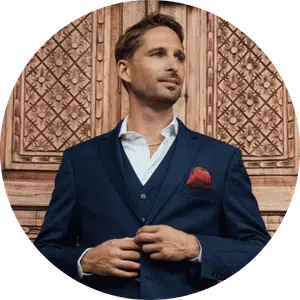
Tim Kroeger is a luxury wellness travel and longevity editor and creator of The Restorative Index. Drawing on 15+ years of travel across 112+ countries and 230+ nights assessed using his framework, he reviews hotels through one question: Did you leave feeling better than when you arrived?
A former Lufthansa flight attendant and endurance traveler, Tim documents his longevity journey as Founding Ambassador of Healthi Life Longevity House in Bangkok. He appeared in ZDF’s Forever Young in Thailand documentary.
Read how 15 years of full-time travel, burnout, and one afternoon in Fiji led Tim to rethink luxury and create the Restorative Index: Read Tim’s story →


